20241014

St Bernard on the vanity of the creature


Using AI I assembled these suggestions by St. Bernard of Clairvaux as to what spiritual reflections might help us recognise the vanity of created things and detach from their allure. These reflections focus on the impermanence of the world, the brevity of human life and the ultimate fulfilment found only in God. Here are some key ideas Bernard proposed to help cultivate this awareness:

1. The Brevity of Life and the Inevitability of Death

Bernard encouraged p ople to meditate on the shortness of human life and the certainty of death as a way to recognise the fleeting nature of all worldly things. In his view, by contemplating mortality, we become aware that material possessions, earthly honours and pleasures will all perish. Death comes quickly, and it is followed by judgment and that reminds the soul that it should focus on eternal realities rather than temporary gains.

2. The Emptiness of Worldly Pursuits

He often pointed out that even if one were to achieve all the wealth, power or status the world could offer, it would still not satisfy the deepest longings of the heart. Bernard taught that created things, though good in themselves as gifts of God, are not the ultimate purpose of human life. He suggested reflecting on the "restlessness" of the soul when it chases after fleeting pleasures and how these pursuits leave people feeling empty and unfulfilled.

3. The Transitory Nature of All Created Things

Bernard emphasised the transient nature of all creatures. He advised Christians to reflect on how everything in the material world changes, decays and ultimately passes away. By contemplating this truth, the soul can come to understand that nothing in the world is permanent or worthy of ultimate trust. This awareness fosters detachment and helps to redirect one’s desires toward the unchanging, eternal God.

4. Human Frailty and Sin

Another point Bernard made was the frailty of human nature, particularly our susceptibility to sin and pride. He believed that when we become overly attached to created things, it often leads to pride, self-indulgence and spiritual blindness. He suggested reflecting on our own fragility and tendency toward sin as a way of recognising our dependence on God's grace rather than on earthly achievements.

5. The Glory of God as the Only True Satisfaction

For Bernard, the highest and truest source of fulfilment was union with God. He encouraged Christians to contemplate the beauty, majesty and eternity of God, in contrast to the imperfection and vanity of worldly things. By focusing the mind on the infinite goodness of God, the soul can see more clearly how trivial and insignificant created things are in comparison.

6. Christ's Humility and Suffering

Bernard often exhorted believers to meditate on the humility and suffering of Christ. By contemplating Christ's example - who, though divine, emptied Himself and embraced poverty and suffering - the soul can better appreciate the futility of seeking worldly greatness or comfort. This helps shift the focus from self-centered pursuits to a life of humility and service, modeled on Christ.

7. The Final Judgment and Eternal Life

He also recommended thinking about the final judgment and the eternal destiny of the soul. Bernard believed that when one keeps in mind the reality of heaven and hell, it becomes easier to see the vanity of earthly attachments. Reflecting on the ultimate reward of eternal life with God can inspire detachment from worldly things and increase one's longing for heavenly joy.

In summary, St. Bernard suggested reflecting on death, the transitory nature of life, human sinfulness, Christ's example, and the promise of eternal life to help believers detach themselves from the vanity of creatures and focus on the ultimate good - union with God.

20241013

Berkhof on the doctrine of God and Creation, Attributes of God (Summary Christian Doctrine)


Part II: The Doctrine of God and Creation
Chapter VI: The Attributes of God
God reveals Himself not only in His names, but also in His attributes, that is, in the perfections of the divine Being. It is customary to distinguish between incommunicable and communicable attributes. Of the former there are no traces in the creature; of the latter there are.

1. The Incommunicable Attributes. These emphasize the absolute distinction between God and the creature, and include the following:
a. The independence or self-existence of God. This means that God has the ground of His existence in Himself, and unlike man, does not depend on anything outside of Himself. He is independent in His Being, in His virtues and actions, and causes all His creatures to depend on Him. The idea is embodied in the name Jehovah and finds expression in the following passages, Ps. 33:11; 115:3; Isa. 40:18 ff.; Dan. 4:35; John 5:26; Rom. 11:33-36; Acts 17:25; Rev. 4:11.
b. The immutability of God. Scripture teaches that God is unchangeable. He is forever the same in His divine Being and perfections, and also in His purposes and promises, Num. 23:19; Pa 33:11; 102:27; Mal. 3:6; Heb. 6:17; Jas. 1:17. This does not mean, however, that there is no movement in God. The Bible speaks of Him as coming and going, hiding and revealing Himself. He is also said to repent, but this is evidently only a human way of speaking of God, Ex. 32:14; Jonah 3:10, and really indicates a change in man's relation to God.
c. The infinity of God. This means that God is not subject. to limitations. We can speak of His infinity in more than one sense. Viewed in relation to His being, it may be called His absolute perfection. He is unlimited in His knowledge and wisdom, in His goodness and love, in His righteousness and holiness, Job 11:7-10; Psa. 145:3. Seen in relation to time, it is called His eternity. While this is usually represented in Scripture as endless duration, Ps. 90:2; 102:12, it really means that He is above time and therefore not subject to its limitations. For Him there is only an eternal present, and no past or future. Viewed with reference to space, it is called His immensity. He is everywhere present, dwells in all His creatures, filling every point of space, but is in no way bounded by space, I Kings 8:27; Ps. 139:7-10; Isa. 66;1; Jer. 23:23, 24; Acts 17:27, 28.
d. The simplicity of God. By ascribing simplicity to God we mean that He is not composed of various parts, such as the body and soul in man, and for that very reason is not subject to division. The three persons in the Godhead are not so many parts of which the divine essence is composed. The whole being of God belongs to each one of the Persons. Hence we can also say that God and His attributes are one, and that He is life, light, love, righteousness, truth, and so on.

2. The Communicable Attributes. These are the attributes of which we find some resemblance in man. It should be borne in mind, however, that what we see in man is only a finite (limited) and imperfect likeness of that which is infinite (unlimited) and perfect in God. Here we have:
a. The knowledge of God. This is that perfection of God whereby He, in a manner all His own, knows Himself and all things possible and actual. God has this knowledge in Himself, and does not obtain it from without. It is always complete and always present in His mind. And because it is all-comprehensive, it is called omniscience. He knows all things, past, present and future, and not only the things that have real existence, but also those which are merely possible. I Kings 8:29; Ps. 139:1-16; Isa. 46:10; Ezek. 11:5; Acts 15:18; John 21:17; Heb. 4:13.
b. The wisdom of God. God's wisdom is an aspect of His knowledge. It is the virtue of God which manifest itself in the selection of worthy ends and in the choice of the best means for the realization of those ends. The final end to which He makes all things subservient is His own glory. Rom. 11:33; I Cor. 2:7; Eph. 1:6, 12, 14; Col. 1:16.
c. The goodness of God. God is good, that is, perfectly holy. in Himself. But this is not the goodness we have in mind here. In this connection we refer to the divine goodness that reveals itself in doing well unto others. It is that perfection which prompts Him to deal kindly and bounteously with all His creatures The Bible refers to it repeatedly, Ps. 36:6; 104:21; 145:8, 9, 16; Matt. 5:45; Acts 14:17.
d. The love of God. This is often called the most central attribute of God, but it is doubtful whether it should be regarded as more central than the other perfections of God. In virtue of it He delights in His own perfections and in man as the reflection of His image. It may be considered from various points of view. The unmerited love of God which reveals itself in pardoning sin is called His grace, Eph. 1:6, 7; 2:7-9; Tit. 2:11. That love relieving the misery of those who are bearing the consequences of sin is known as His mercy or tender compassion, Luke 1:64, 72, 78; Rom. 15:9; 9:16, 18; Eph. 2:4. And when it bears with the sinner who does not heed the instructions and warnings of God it is named His longsuffering or forbearance, Rom. 2:4; 9:22; I Pet. 3:20; II Pet. 3:16.
e. The holiness of God. God's holiness is first of all that divine perfection by which He is absolutely distinct from all His creatures, and exalted above them in infinite majesty. Ex. 15:11; Isa. 57:15. But it denotes in the second place that He is free from all moral impurity or sin, and is therefore morally perfect. In the presence of the holy God man is deeply conscious of his sin, Job 34:10; Isa. 6:5; Hab. 1:13.
f. The righteousness of God. The righteousness of God is that perfection by which He maintains Himself as the Holy One over against every violation of His holiness. In virtue of it He maintains a moral government in the world and imposes a just law on man, rewarding obedience and punishing disobedience, Ps. 99:4; Isa. 33:22; Rom, 1:32. The justice of God which manifests itself in the giving of rewards is called His remunerative justice; and that which reveals itself in meting out punishment is known as His retributive justice. The former is really an expression of His love, and the latter of His wrath.
g. The veracity of God. This is that perfection of God in virtue of which He is true in His inner being, in His revelation, and in His relation to His people. He is the true God over against the idols, knows things as they really are, and is faithful in the fulfillment of His promises. From the last point of view this attribute is also called God's faithfulness. Num. 23:19; I Cor. 1:9; II Tim. 2:13; Heb. 10:23.
h. The sovereignty of God. This may be considered from two different points of view, namely, His sovereign will, and His sovereign power. The will of God is represented in Scripture as the final cause of all things, Eph. 4:11; Rev. 4:11. On the basis of Deut. 29:29 it is customary to distinguish between the secret and the revealed will of God. The former is the will of God's decree, which is hidden in God and can be known only from its effects, and the latter is the will of His precept, which is revealed in the law and in the gospel. God's will respecting His creatures is absolutely free, Job 11:10; 33:13; Ps. 115:3; Prov. 21:1; Matt. 20:15; Rom. 9:15-18; Rev. 4:11. The sinful deeds of man are also under the control of His sovereign will, Gen. 50:20; Acts 2:23. The power to execute His will is called his omnipotence. That God is omnipotent does not mean that He can do everything. The Bible teaches us that there are some things which God cannot do. He cannot lie, sin, deny Himself, Num. 23:19; I Sam. 15:29; II Tim. 2:13; Heb. 6:18; Jas. 1:13, 17. It does mean that He can, by the mere exercise of Hie will, bring to pass whatsoever He has decided to accomplish, and that, if He so desired, He could do even more than that, Gen. 18:14; Jer. 32:27; Zech. 8:6; Matt. 3:9; 26:53.

To memorize. Passages to prove God's:
a. Incommunicable attributes:
Independence.
John 5:26. "For as the Father hath life in Himself, even so He gave to the Son also to have life in Himself."
Immutability.
Mal. 3:6. "For I, Jehovah, change not; therefore ye, 0 sons of Jacob, are not consumed."
James 1:17. "Every good gift and every perfect gift is from above, coming down from the Father of lights, with whom can be no variation, neither shadow that is cast by turning."
Eternity.
Ps. 90:2. "Before the mountains were brought forth, or ever Thou hadst formed the earth and the world, even from everlasting to everlasting, Thou art God."
Ps. 102:27. "But Thou art the same, and Thy years have no end."
Omnipresence.
Ps. 139:7-10. "Whither shall I go from Thy Spirit? Or whither shall I flee from Thy presence? If I ascend up into heaven, Thou art there: if I make my bed in Sheol, behold Thou art there. If I take the wings of the morning, and dwell in the uttermost parts of the sea; even there shall Thy hand lead me, and Thy right hand shall hold me."
Jer. 23:23, 24. "Am I a God at hand, saith Jehovah, and not a God afar off? Can any hide himself in secret places so that I shall not see him' saith Jehovah. Do I not fill heaven and earth? saith Jehovah?"
b. Communicable attributes:
Omniscience.
John 21:17b. "And he said unto Him, Yea, Lord, Thou knowest all things', Thou knowest that I love Thee."
Heb. 4:13. "And there is no creature that is not manifest in His sight; but all things are naked and laid open before the eyes of Him with whom we have to do."
Wisdom.
Ps. 104:24. "0 Jehovah, how manifold are Thy works! In wisdom hast Thou made them all."
Dan. 2:20, 21b. "Blessed be the name of God for ever and ever; for wisdom and might are His.... He giveth wisdom unto the wise, and knowledge to them that have understanding."
Goodness.
Ps. 86:5. "For Thou, Lord, art good, and ready to forgive, and abundant in lovingkindness unto all them that call upon Thee."
Ps. 118:29 "0 give thanks unto the Lord, for He is good; for His lovingkindness endureth forever."
Love.
John 3:16. "God so loved the world, that He gave His only begotten Son, that whosoever believeth on Him should not perish, but have eternal life."
I John 4:8. "He that loveth not knoweth not God; for God is love."
Grace.
Neh. 9:17b. "But Thou art a God ready to pardon, gracious and merciful, slow to anger, and abundant in lovingkindness."
Rom. 3:24. "Being justified freely by His grace through the redemption that is in Christ Jesus."
Mercy.
Rom. 9:18. "So then He hath mercy on whom He will and whom He will He hardeneth."
Eph. 2:4, 5. "But God, being rich in mercy, for His great love wherewith He loved us, even when we were dead through our trespasses, made us alive together with Christ."
Longsuffering or forbearance.
Num. 14:18. "Jehovah is slow to anger, and abundant in lovingkindness, forgiving iniquity and transgression."
Rom. 2:4. "Or despisest thou the riches of His goodness and forbearance and longsuffering, not knowing that the goodness of God leadeth thee to repentance?"
Holiness.
Ex, 15:11. "Who is like unto Thee, 0 Jehovah, among the gods? Who is like unto Thee, glorious in holiness, fearful in praises, doing wonders?"
Isa. 6:3b. "Holy, holy, holy, is Jehovah of hosts: the whole earth is full of His glory."
Righteousness or justice.
Ps. 89:14. "Righteousness and justice are the foundation of Thy throne."
Ps. 145:17. "Jehovah is righteous in all His ways, and gracious in all His works."
I Pet. 1:17. "And if ye call on Him as Father, who without respect of persons judgeth according to each man's work, pass the time of your sojourning in fear."
Veracity or faithfulness.
Num. 23:19. "God is not a man, that He should lie, neither the son of man, that He should repent. Hath He said, and will He not do it? Or hath He spoken, and will He not make it good?"
II Tim. 2:13. "If we are faithless, he abideth faithful; for He cannot deny Himself."
Sovereignty.
Eph. 1:11. "In whom also we were made a heritage, having been foreordained according to the purpose of Him who worketh all things after the council of His will."
Rev. 4:11. "Worthy art Thou, our Lord and our God, to receive the glory and the honor and the power; for Thou didst create all things, and because of Thy will they were, and were created."
Secret and revealed will.
Deut. 29:29. "The secret things belong unto Jehovah our God; but the things that are revealed belong unto us and to our children for ever, that we may do all the words of this law."
Omnipotence.
Job 42:2. "I know that Thou canst do everything." Matt. 19:26. "With God all things are possible." Luke 1:37. "For with God nothing shall be impossible."
For Further Study:
a. Give instances in which the Bible identifies God and His attributes, Jer. 28:6; Heb. 12:29; I John 1:5; 4:16.
b. How can God be just and gracious to the sinner at the same time, Zech. 9:9; Rom. 3:24-26?
c. Prove from Scripture that God's foreknowledge includes conditional events. I Sam. 23:10-13; II Kings 13:19; Ps. 81:13-15; 48:18; Jer. 38:17-20; Ezek. 3:6; Matt. 11:21.

20241012

Thomas Watson on Studying the Vanity of the Creature


In his Art of Divine Contentment Thomas Watson gives rules for gaining contentment. Rule 12 says

Study the vanity of the creature. It matters not whether we have less or more of these things, they have vanity written upon the frontispiece of them; the world is like a shadow that declineth; it is delightful, but deceitful; it promiseth more than we find, and it fails us when we have most need of it. All the world rings changes, and is constant only in its disappointments: what then, if we have less of that which is at best but voluble and fluid? The world is as full of mutation as motion; and what if God cut us short in sublunaries? The more a man hath to do with the world, the more he hath to do with vanity. The world may be compared to ice, which is smooth, but slippery; or to the Egyptian temples, without very beautiful and sumptuous, but within nothing to be seen but the image of an ape; every creature saith concerning satisfaction, it is not in me. The world is not a filling, but a flying comfort. It is like a game at tennis; providence bandies her golden balls, first to one, then to another. Why are we discontented at the loss of these things, but because we expect that from them which is not, and repose that in them which we ought not? “Jonah was exceeding glad of the gourd.” (Jon. 4. 6) What a vanity was it? Is it much to see a withering gourd smitten? Or to see the moon dressing itself in a new shape and figure? 

Sermon Four Last Things (5)


We are looking at the subject of meditation. If we profess to be Christians that implies certain obligations on our part. A Christian will pray. Devote yourselves to prayer, Paul says (Colossians 4:2). A Christian will read their Bible. Psalm 1 says of the blessed person that their delight is in the law of the Lord, and on his law they meditate day and night.
We should also give ourselves to meditation. Psalm 119:15 I meditate on your precepts and consider your ways. Philippians 4:8 Whatever is true, whatever is noble, whatever is right, whatever is pure, whatever is lovely, whatever is admirable - if anything is excellent or praiseworthy - think about such things. Use your mind to go over these things.
To help us in this we are suggesting subjects that you can usefully meditate on.
Three weeks ago we spoke about how we can think about God himself - his nature and attributes. Rather than thinking of God in a vague and disorganised way take Question and Answer 4 of The Westminster Shorter Catechism. It asks "What is God?" and expects the answer "God is a Spirit, infinite, eternal and unchangeable in his being, wisdom, power, holiness, justice, goodness, and truth."
Then the week before last we thought about the states of Christ - his humiliation and exaltation. His humiliation begins with Christ's incarnation, the Word becoming flesh. Then there are the sufferings that he endured on our behalf all his life, culminating in his death, death on a cross and his burial in the tomb. His exaltation begins with his resurrection from the dead on the third day, followed by his ascension into heaven so that now he is in heaven where he is at God's right hand, interceding for his own and from where he will one day come to judge this whole world.
Last week it was human nature in its fourfold state -
1 Pre-fall man in the State of Innocence in Eden
2 Fallen man in the State of Nature in his sin and misery and inability to change, the state of all of us by nature
3 Reborn man in the State of Grace; our present state as beievers
4 Glorified man in the State of Glory in heaven.
To put it simply, there is Before the fall, After the fall, After regeneration and In glory.
This week I want to commend to you another topic for meditation - This is to do with Christian eschatology, or the last things. It is about what is often called the Four Last Things (theat is the last four things to do with man). These are Death, Judgment, Heaven and Hell. We are talking about the four last stages of the soul in life and the afterlife.
They are often commended as a collective topic for pious meditation. St Philip Neri apparently said "Beginners in religion ought to exercise themselves principally in meditation on the Four Last Things." Traditionally, the sermons preached on the four Sundays of Advent wold be on the Four Last Things.
The Puritans used to like to write on the subject. Among their tomes are The Four Last Things: Death, Judgment, Hell, and Heaven by Robert Bolton; published posthumously in 1639. Four Last Things - Death, Judgment, Heaven, and Hell by William Bates, which appeared in 1691. In 1683 John Bunyan published a poem on the subject. It was called One thing is needful or serious meditations upon the Four Last Things. The Four Last Things have become a common theme for artistic and literary works as well as theological writing but I'll leave you to explore that for yourselves if you wish. What I want to do is simply to stimulate you to think about these things.
1. Meditate on the first of the last things - death
First, we want to meditate then on death. In hebrews 9:27 it says people are destined to die once. There are four main things we want to say under this heading.
1. We want to define death. Death is to do with separation. In the beginning there was no death but Adam and Eve were warned that if they should eat from a certain tree in the Garden of Eden they would surely die. As you know, they did eat and so they died. First they died spiritually. A separation was introduced that had not been there before - a separation from God.
Spiritual death was followed in due time by physical death - the separation of body and soul or spirit. That is what happens when a person dies. On the cross Christ gave up his spirit. That was unique. Normally it is God who decides when a person's spirit and body are separted. Their visible body and their invisible soul are separated. The body remains here on earth and is either buried or cremated or whatever. The spirit or soul appears before God to be assigned to heaven or hell. It is only at that the resurrection that body and soul will be reunited.
2. We want to remind ourselves that we can all expect it at some point. As is often said death is a fact of life. It is true that there will be a generation that escapes death - those who are alive when Christ returns - but for most of us we can expect one day to die. It is good to meditate on the fact.
I think Adoniram Judson the 19th century missionary to Burma went wrong when he adopted the practice of sleeping in his own coffin at one time. We should meditate on the fact that we will one day die, however. As each day passes, the closer we come to that day.
3. We want to remind ourselves too that it is the last enemy. It is important too to see that death is an enemy, the last enemy the Bible calls it. Many people say they are not afraid to die. Woody Allen famously said so - although he added more realistically that he didn't want to be there when it happened! Stephen Hawking the scientist who suffered from a rare moto-neuron disease who died in 2018 often said it. For example in a 2011 interview he said “I have lived with the prospect of an early death for the last 49 years. I’m not afraid of death, but I’m in no hurry to die. I have so much I want to do first.” This is to underestimate what death is. Death is not natural even though it is so common It is a curse, an enemy to be faced and we ought to reckon with that.
4. Fourthly, we want to say that death is different for unbeliever and believers. It is a fair inference from Scripture that the death of the unbeliever is not the same as the death of the believer. This becomes clear once you ask the question - why did this person die, an unbeliever? Romans 5:12 tells us sin entered the world through one man, and death through sin, and in this way death came to all people, because all sinned. We are sinners and so we die. But what about believers? Why do they also die? The death of the believer is part of his sanctification. The believer is no longer in fear of death - Christ came to free those who all their lives were held in slavery by their fear of death. (Hebrews 2:15). In 1 Corinthians 15:56, 57 Paul says The sting of death is sin, and the power of sin is the law. But thanks be to God! He gives us the victory through our Lord Jesus Christ. Yes, death is still an enemy but an enemy we can face by the grace of God as we take the last step on the road that leads to heaven.
2. Meditate on the second of the last things - judgement
The second thing we want to think about is the judgement which immediately follows on from death. Hebrews 9:27 again people are destined to die once, and after that to face judgment. Romans 14:10 ... We will all stand before God's judgment seat.
Again there are several things to say.
1. When? - the time. It is clear that when Jesus comes again there will be a great and general resurrection from the dead of all and then the judgement will begin. Revelation 20:13 The sea gave up the dead that were in it, and death and Hades gave up the dead that were in them, and each person was judged according to what he had done.
2. Who? - the Judge and the judged. The Judge will be Jesus himself. Paul speaks in Acts 17 of God having set a day when he will judge the world with justice by the man he has appointed. Jesus was raised from the dead for this work. Matthew 25:31, 32 When the Son of Man comes in his glory, and all the angels with him, he will sit on his throne in heavenly glory. All the nations will be gathered before him .... All the righteous will also be involved in the judgement with Christ, especially the Twelve. 1 Corinthians 6:2 Do you not know that the Lord's people will judge the world? Matthew 19:28 I tell you the truth, at the renewal of all things, when the Son of Man sits on his glorious throne, you who have followed me will also sit on 12 thrones, judging the 12 tribes of Israel.
The judgement will involve those of every nation (Genesis 18:25 - The judge of all the earth. Matthew 25:32 All the nations will be gathered before him ....). All people: Hebrews 12:23 - God, the judge of all. No-one will escape. It includes the angels too.
3. Where? - the place of judgement. This is open to debate but it appears to take place here on earth.
4. What? - the nature of the judgement. We are told that all will be gathered and then the books will be opened. Revelation 20:12a And I saw the dead, great and small, standing before the throne, and books were opened. The Puritan Thomas Vincent identifies these books as being five in number. He is probably right. What are these books?
1 The book of God’s remembrance - The names of all who ever lived are known to him. He knows when and where they lived and the various dispensations of providence to them for their good. he especially know all they ever did and thought, good or evil.
2 The book of men’s consciences - God has given each person a soul. Part of the function of the soul is to act as conscience. Conscience includes a record of good and evil. In this life conscience is often rather sleepy and defective. But it can be stirred up. $ Have you ever written a secret message with lemon juice? When the heat is applied the writing suddenly becomes clear. That's how conscience will be then and things long suppressed and forgotten will be brought to light.
3 The Book of the Law, God’s Law – this is known to God's people. It is on their hearts and it is written in Scripture. Its requirements are found on everyone’s conscience to a greater or lesser degree. By this standard we are all to be judged. The Law is summed up in the Ten Commands.
4 The Book of the gospel - This is the only answer to the Law. By this book all the sins of believers will be refuted. Even in the case of the weakest $ Ever read a book or heard an argument that looks unanswerable - then seen it answered. So the gospel answers the seemingly unanswerable Law. The gospel says that by repenting and trusting in Christ all your failure to keep the Law can be forgiven because Jesus has lived an died in your place to satisfy the justice of God.
5 The Book of Life - Revelation 20:12, 15 And I saw the dead, great and small, standing before the throne, and books were opened. Another book was opened, which is the book of life. ... If anyone's name was not found written in the book of life, he was thrown into the lake of fire. This is the book containing the names of all the elect. No-one has ever seen it. It is no good trying to peer into it. All we know is that there is such a book with the names of all who trust in Christ and live for him in it.
1 Corinthians 4:5 God will bring to light what is hidden in darkness and will expose the motives of the heart. At that time each will receive their praise from God. ... 2 Corinthians 5:10 For we must all appear before the judgment seat of Christ, that each one may receive what is due to him for the things done while in the body.
3. Meditate on the third of the last things - hell
It is clear that after the judgement every person is assigned either to heaven or hell. No third alternative is suggested. The moment we die we are judged and our souls go to heaven or hell then there is the final detailed judgement and from then on body and soul are either in hell or heaven.
So, thirdly, we come to hell. This is where all who have failed to repent and trust in Christ will end up after death and judgement. This is where they will be forever.
Hell is a fact just a much as heaven is a fact. Jesus spoke of both. Therefore, as much as we may shrink from the task, we ought to consider it. In Matthew 25 three verses speak about hell. Verses 30 and 41 and 46. In those three verses, which draw on various Old Testament images we learn a number of things about hell. Know that hell is
1. A place outside. Matthew 25:30 Jesus says throw that worthless servant outside, into the darkness, where there will be weeping and gnashing of teeth. Some translations prefer to speak about throwing him into the outer darkness. Whichever, the point is that hell is outside, exterior, on the edge.
The picture, more specifically, is the one in Revelation 22:14 Outside outside the city are the dogs, those who practice magic arts, the sexually immoral, the murderers, the idolaters, etc for (21:27) Nothing impure will ever enter New Jerusalem, nor will anyone who does what is shameful or deceitful, but only those whose names are written in the Lamb's book of life. Hell means being shut out of heaven, shut out from God's presence. It is to be left outside.
2. A place characterised by darkness Hell is also spoken of as a place of darkness. Darkness often stands for ignorance and evil, chaos and disorder and death. Light speaks of life and darkness of death and decay and one day the distinction that God originally made between light and darkness, night and day, will be made permanent and lasting. In heaven there will be light and it will always be day, in hell it will be only darkness and night.
3. Where there is weeping and gnashing of teeth. The other thing verse 30 mentions is weeping and gnashing of teeth. Again it is the very opposite of heaven. Gnashing of teeth is a striking phrase. Commentators suggest it speaks of remorse of conscience, torture of mind, a sense of inexpressible pain, furious rage, black despair. No doubt all these are included. It is a horrible picture – people weeping, not quietly and meekly but grinding or gnashing their teeth. Sometimes people speak of the cries of hell. This is what we are talking about – the sound of weeping and anguished gnashing of teeth.
4. Where are those who are cursed. In verse 40 the King says to the goats on his left, the unbelievers, Depart from me, you who are cursed. A curse is something you can't shake off. If you are cursed then nothing you can do can lift that curse. It remains. Human curses, of course, cannot make any real difference to anything, but we should still refrain from them for it is very unkind to curse someone and it can play on some people's minds so that they believe that the curse is real. When God curses a person it does make a difference. There is non escape. That curse ends in hell. Now this whole world is under God's curse and we are all affected. The only way out is if the curse falls on someone else instead of you. And that's the great message of the Bible. Christ has taken the curse on himself at the cross so that all who trust in him, before it's too late, may be delivered and know God's eternal blessing.
5. A place of eternal fire. Perhaps the best known thing about hell is that it is an eternal fire. There are plenty of sceptics, of course. Some say that the word eternal doesn't mean eternal here and it is true that the word used can mean age rather than eternity. However, it is clear that when it says at the end of the chapter Then they will go away to eternal punishment, but the righteous to eternal life eternal punishment and eternal life must last for the same amount of time and that is forever. Others ask how hell can be darkness and eternal fire when we know fire makes light. However, we know enough about electromagnetic radiation and microwaves, perhaps, to understand that intense heat may be unseen. Anyway these details are surely not to be understood in a literalistic way. They are there to help us to understand the horror of that place. One reason God has given us fire and the pain it causes is to warn us against hell. Let's take in that lesson. An everlasting fire is almost inconceivable. $ The nearest we come to it is the rubbish dump outside Jerusalem that was apparently always burning, its fire never going out.
6. A place of eternal punishment. Finally (46) we are told that this is eternal punishment. The idea of punishment is not a popular one today - that is the authoritative imposition of something negative or unpleasant on a person in response to behaviour deemed wrong. The idea is abroad that there should be no punishment – only therapy and rehabilitation, paying one's debt to society, etc. This is one reason that we have so many problems with law and justice. In fact there is such a thing. Indeed, there is endless punishment from God for all who refuse to come to him for mercy. It is a sobering fact.
4. Meditate on the fourth of the last things - heaven
Finally, heaven is not only where God lives but where his people will be with him forever and ever after death and judgement. Let me remind you of some things about heaven. In heaven
1. There will no longer be any sea. Revelation 21:1 Then I saw a new heaven and a new earth, for the first heaven and the first earth had passed away, and there was no longer any sea. The Bible is very clear that this present heaven and earth is not going to last forever. One day soon it is going to be destroyed and replaced by a new heavens and a new earth. One of the features of this new heavens and earth according to this verse is that there will no longer be any sea, which seems like a rather strange thing to say until, firstly, we remind ourselves where and when this final book of the Bible was written. John wrote this remarkable book while he was exiled, as a punishment for his Christian faith, on the small Island of Patmos and over 60 miles from Ephesus. Day after day John was surrounded by sometimes stormy sea and all the time to reminded him of how cut off he was from fellowship. But he knew that one day that would be over and he would be with the saints of Ephesus and of the other churches he wrote to in the new heavens and the new earth and there would be no more parting. It is out of the sea that the Beast comes in Revelation and the sea stands often in Scripture for restlessness and turmoil and trouble.
2. There will be no more tears or pain. Revelation 21:4 God will wipe every tear from their eyes. There will be no more death or mourning or crying or pain, for the old order of things has passed away. This is another aspect of God making everything new. Here is the refreshment his people will know, the victory that will belong to all who turn from sin and trust in Christ. I suppose it is true in this world that we cry less as we grow older, especially in public. Babies cry all the time, children quite a lot, teenagers rarely and grown ups hardly at all. But that is not because we do not want to weep at times. When we hear of a death of someone close to us or when we remember the times we had with them before they died, when we are in pain or suffering or in sympathy with others who are in pain or suffering. This world is full of tragedy. There are orphans, widows and widowers. There are people with no money or no friend in the world. People who just do not know what to next or where to turn. There are people learning today that they or their loved ones have life threatening diseases. This fallen world is a world of suffering, sickness, death. If a tear does not come to your eye from time to time then perhaps you are simply not looking at what is going on or have hardened yourself off to too great an extent.
3. There will be no Temple. Verse 22 another glorious negative. John: I did not see a temple in the city, and if that may seem strange it is immediately explained because the Lord God Almighty and the Lamb are its temple. No need for a temple when God himself and his Son are there! That is how it will be. It is a marvellous thing that now we can pray and immediately be in God's presence. That is an amazing thing and a taste of heaven. How much more so in heaven! Today we may have doubts of the Lord's nearness but never at all there!
4. There will be no night. Verses 23-26 The city does not need the sun or the moon to shine on it, for the glory of God gives it light, and the Lamb is its lamp. The nations will walk by its light, and the kings of the earth will bring their splendour into it. On no day will its gates ever be shut, for there will be no night there. The glory and honour of the nations will be brought into it. Now in Scripture night or darkness also has a meaning that often comes out. It stands for ignorance and evil, for chaos and disorder. It is often used to describe unbelief (the kingdom of darkness) and hell – the very opposite of heaven.
5. There will be nothing impure. With that idea we can take verse 27 Nothing impure will ever enter it, nor will anyone who does what is shameful or deceitful, but only those whose names are written in the Lamb's book of life. Not only will it be a place of sweetness and light, where there is no sin or evil of any sort but there cannot be in heaven any person who does what is shameful or deceitful. No, the only people there are those, as it says here, whose names are written in the Lamb's book of life. In other words only true Christians will be in heaven. That obviously raises the question for all of us of where we stand.
6. There will be no longer be any curse. Finally 22:3, 4 No longer will there be any curse. The throne of God and of the Lamb will be in the city, and his servants will serve him. They will see his face, and his name will be on their foreheads. What spoils everything in this world and what means there is no escape from hell without Christ is the curse that it is under and has been under since man's fall. This is no idle or ineffective curse but one that is real and that reaches all not just some. But there is a place in this universe the curse does not reach and one day that kingdom will be revealed and set up and all who belong to Christ will find safety from the curse in that place.

The Divine Works 2


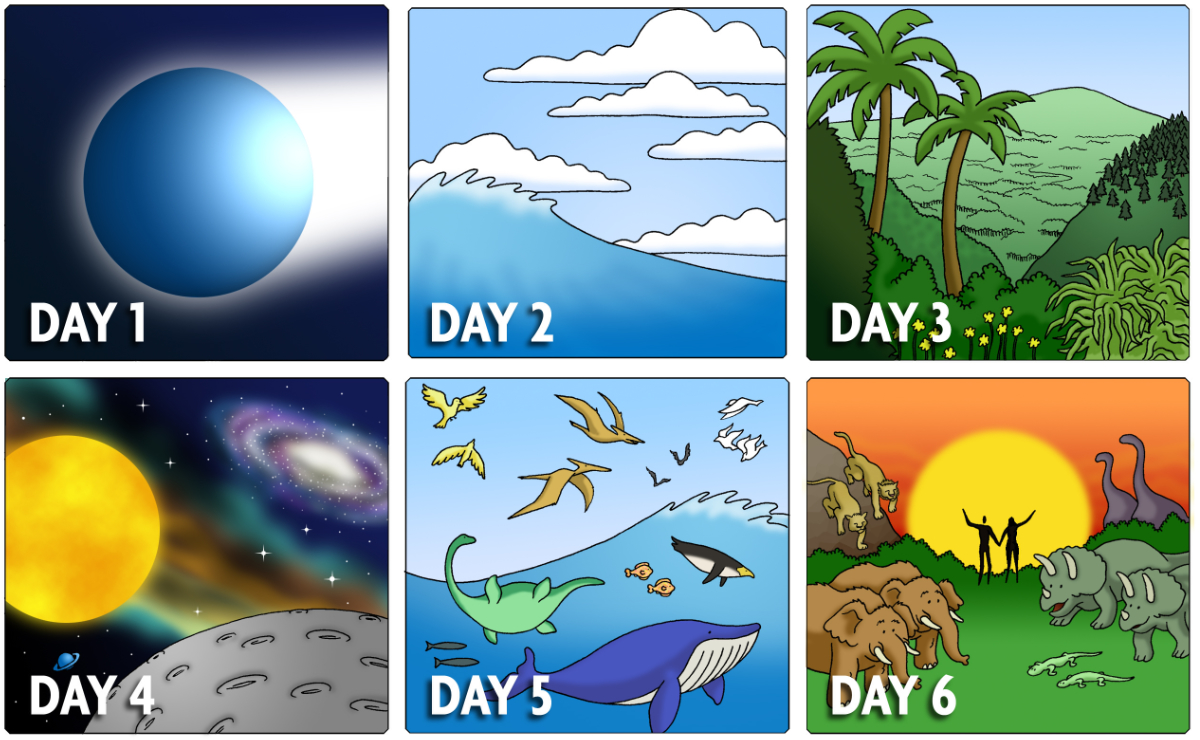
Picking up on the hint from Gearing, one way to meditate on the divine works would be simply to meditate on what God created on the six days of creation. That is

Day one when God created light and dark
Day two when God created the sky
Day three when God created dry land, seas, plants and trees
Day four when God created the sun, moon and stars
Day five when God created creatures that live in the sea and creatures that fly
Day six when God created animals that live on the land and humans, made in the image of God

And so one could meditate on
  • Day and night and light and dark
  • The sky, including its major layers - the troposphere, stratosphere, mesosphere, thermosphere and exosphere.
  • The land and the sea and the various plants and trees that grow in and on them. There are various ways of dividing up plants, eg ferns, mosses, gymnosperms and flowering plants or Herbs, Shrubs, Trees, Climbers and Creepers.
  • The sun, moon and planets and stars and comets. In our solar system the terrestrial planets we call Mercury, Venus, Eart  and Mars, and the giant planets Jupiter, Saturn, Uranus and Neptune.
  • Creatures that live in the sea and creatures that fly. As for sea creatures, one can think of sea reptiles, like turtles; fish; sharks and rays; cephalopods, crustaceans and other shellfish; corals and invertebrates; marine mammals, like seals.
  • As for birds, examples include Crow, Dove, Sparrow, Woodpecker, Owl, Eagle, Hen, Parrot, Raven, Stork, Swan, Quail, Pelican, Kingfisher.
  • Animals that live on the land and human beings, made in the image of God. Land animals include reptiles and many different mammals. These include rodents, such as rats, mice, squirrels and voles; insectivores, such as hedgehogs, moles and shrews; carnivores, such as foxes, badgers, otters, pine martens, stoats, weasels and polecats; lagomorphs, ie rabbits, brown hares and mountain hares; deer, including red deer, fallow deer, roe deer and muntjac; other mammals including bats, etc.
  • To think about human beings one can focus on parts such as the eye or the ear or the hand and how God has made them. The fact we are body and soul is fascinating.

20240918

Gearing on meditating on the works of God


In his work on The Mount of holy meditation William Gearing (1625-1690) says

Chap. 8. Of the subject of Meditation. Sect. 1. Of meditation on the works of God.
I now proceed to discusse the subject-matter of meditation; and here I am launching into a great Ocean, but like the dogs of Nilus, I shall but lick and away.
The first subject of meditation is God's works of Creation; a fit matter for our serious meditations: I remember the dayes of old, saith David, I meditate on all thy works, I muse on the work of thy hands, Psal. 145.5. He looketh up to the Heavens, and considereth the work of God's fingers, meditating on all those works that were visible to the eye of man, Psal. 8.3 called elsewhere the work of his hands. Isa. 48.13. My hand hath laid the foundation of the earth, and my right hand hath spanned the Heavens; it is for that they are of such excellency, as if they had been his handywork indeed, which yet were made by his word only, as Moses, and St John do declare, Gen. 1.6. Joh. 1.3. That great advancer of learning hath an excellent passage suitable hereunto. It is to be observed, saith he, that for any thing which appeareth in the History of the Crea∣tion, the confused masse and matter of Heaven and earth was made in a moment, and the order and disposition of that Chaos or mass was the work of six dayes; such a note of difference it pleased God to put upon the works of power, and the works of wisdome: wherewith concurreth, that in the former it is not set down that God said, Let there be Heaven and earth, as it is set down of the works following, but actually, that God made Heaven and earth, the one carrying the stile of a Manufaction, the other of a Law, Decree or Councell. It is not enough that we barely look on the works of God, but we must meditate upon them; for if we do no more than see them, the Oxe, the Bull, and the Horse, do as much as we. If we see nothing in the Heavens, saith a grave Divine, but that they are lightsome, and above our reach, the Horse and Mule see this as well as we; if we see nothing in the earth, but a place to walk in, or to take our rest upon it, the beasts and fouls see this as well as we; if we see nothing in our gorgeous apparell, but the pride of a goodly colour, the Peacock seeth that in his feathers; if in all our refreshment from the creatures we know nothing but the pleasure and sweetnesse of our sense, the Swine hath as great a share herein as we; if hear∣ing, seeing, smelling, tasting, feeling, be all the comfort we can find in the works of God, the dumb creatures have these senses more exquisite than we, and we have turned the hearts of men into the hearts of beasts, who with wisdome and reason can do nothing, and the words of the Prophet are fulfilled in us, Man being in honour understandeth not, and is like the beasts that perish, Psal. 49.20. therefore the sight of God's works must affect us more than so, else shall we be but as the beasts, and follow them.
Now you are to meditate how God brought forth all his works in the space of six dayes, before he finisht them; he did not create the world all at once, but took time for the Creation of it, to teach us to take speciall time duely and orderly to consider and meditate on the works of God: if he that could have made the Heavens and the earth, the Sun, Moon, and Stars, and all crea∣tures, in a moment; yet it pleased him to take time for the creating of them; this should teach us to select some space of time for the meditation of them: we must not think it enough to look up∣on them at one view, but to passe from part to part, from one creature to ano∣ther, and in every creature to admire the workmanship, power, wisdome and goodnesse of the Creatour, as we are taught, Psal. 92.4, 5. Thou Lord hast made me glad through thy works, and I will triumph in the works of thy hands: O Lord how great are thy works, and thy thoughts are very deep: a bruitish man knoweth not, neither doth a fool understand this; which Psalm as the Title tells us, was a meditation penned for the Sabbath day: therefore I say, God would spend six dayes about the Creation of the world, whereas he might have done it in an instant, and in a moment of time, to the end that we might the better meditate upon it from point to point, for which purpose he presently ordained the Sabbath: Thus Job 1:6 tells us, that we must not idly behold the work, but must magnifie the workman; Remember that thou magnifie his work which men behold; this we will do coming into the Shop of an excellent Artizan. The eternall power and Godhead is seen by the things that are made; but most of us have great cause to be ashamed, that we have spent so little time in meditating on the works of God; yea who can truly say, he hath spent so much time in meditating on God's works, as God spent in ma∣king them? How few are there that have set apart so much time ever since they were born, as (if it were all laid together) will make up six dayes one entire week? What a shame is it for man whom God made on purpose to view his works, and by them to glorifie him, not to spend so much time in meditating upon them, as God spent in making of them; therefore we have great cause to become more carefull and studious readers of this great Book of nature for time to come: There is a threefold Book into which a Christian is to make inspection,

The Book of nature, or of the creatures.
The Book of the Scriptures.
The Book of conscience.

The Book of the creatures hath a powerfull conviction; meditate upon it, and observe God's power, or thou art an Atheist.
The Book of the Scriptures hath a power of conversion; meditate on it, and learn the will of God out of it, so to serve him, or thou art an hypocrite.
The Book of conscience hath a pow∣er of accusation; meditate on it, or thou art an Infidel.


The Book of nature hath God spread wide open, and before us, that he that runs may read; Austin calls the world Gods Book in folio; every creature should be to us a page in this Book, and every part of a creature a line in this Book: How carefull should we be to take these things into our thoughts: our Saviour saith, Matth. 24.15. When ye shall see the abomination of desolation (spoken of by Daniel the Prophet) stand in the holy place, who so readeth, let him understand: So say I, let him that readeth in this great Book of nature, understand to what end these creatures were created, even to the end that we might view them, and in them glorifie the Creatour.
And seeing God hath not only acquainted us, in the grosse, what he did in generall, but hath condescended so far, as to tell us, what he did every day; what he did the first day, what he did the second day, &c. I dare boldly affirm, that it were very convenient and expedient every day to set apart some time on that day, to meditate on the works that were created on that day; it is as convenient a method, as any I can imagine, for it is following of God in the Creation this being considered, together with the dulnesse of our apprehensions, and how apt our thoughts are to turn aside to vain and unprofitable objects, the order will be found to be very necessary.


I shall give you a tast of such kinds meditations, from one of the dayes of the week, the first day of the week called the Lord's day: on this day set apart some time to meditate on the works that were on that day created first, the works of the evening, the works of the morning.

1. The works of the evening; as the creating that huge body of the Heavens: when we see that vast body, and how God stretcheth out the Heavens as a curtain; the greatnesse of the Heavens should teach us to meditate on the greatnesse of the infinite Jehovah: if the Heavens do so far exceed our thoughts, how great then is he whom the Heaven of Heavens are not able to contain: if the earth be so glorious (as it is in the spring time) how unspeakably glorious are the Heavens which far exceed the earth; and here we may admire his greatnesse, who was able to set up such a rich canopy and covering over the earth; and here also let us meditate on the unspeakable goodnesse of God to man, that he hath made for man not only a rich dwelling here below, but also provideth for him a dwelling place in the Heavens, there to sit down with him in his Throne, Rev. 3.20. That man that is but dust and ashes, a lump of earth here below, should be exalted to the highest place of the Creation: this should check us or our folly, in suffering the earth to steal away our hearts from God, as if there were no greater happinesse to be had than here below: what stupid creatures are we to spend more time in getting a few white and red pieces of earth, than in getting a glorious possession of the Kingdome of Heaven, for the attainment whereof we should think no time too much, no pains too great, no affections too strong.
Furthermore, bring your meditations to the earth, created on the same day also, that which yeelded matter and stuffe for the making of all creatures here below: consider, that the earth was a formlesse lump before God beautified and adorned it, it was a meer nothing: Painters can draw pictures without colours; Architects raise no buildings without materials and if you take away Marble or Porphiry from Engravers, they can carve neither Images nor Statues. It is only God that actuateth nothing, that formeth being out of a non-entity, as one well saith: the earth receiveth its being, beauty, and all it hath from God.
The meditation hereof should not suffer us to let any thing in the ears to withdraw our hearts from God: sore God made the earth it was nothing; wilt thou set thine eyes upon that which is not? Why should that which is nothing draw away our hearts from God who is full of all perfection; the earth also at first was a confused masse of things, without form, and void: this should draw out from us this meditation; to make us to consider, that we that are of the earth are altogether polluted in sin, lying in our bloud, our souls being all stained with sin, and without any form of holinesse and righteousnesse, yea void of all the saving graces of Gods Spirit: In me, saith Paul, that is in my flesh, there dwelleth no good thing: and as darknesse was then upon the face of the deep, so darknesse is upon the face of our souls; a man may see, hear, read, but can have no true discerning of spirituall things, till the day-Star arise in his heart, for spirituall blindnesse is upon the face of his soul.
Here then is condemned the folly of those that think ignorance the mother of devotion; but while men remain in their naturall blindnesse, they can perform no pleasing service to God; blind services may be acceptable to the Prince of darknesse, but they are abominable to the Father of lights: light was the first thing that God made in the Creation; and when there was light, the earth lay for some dayes dead and senslesse lump, and could not so much as bring forth one grasse or herb, till the Spirit of God moved on the face of the waters: so in a new Creation, when there is no light wrought in the understanding yet canst thou not bring forth one pleasant fruit of holinesse, till the Spirit of God flutter over thee, and by a divine heat and warmth move and stir thy soul, and enable thee to perform acceptable obedience to God.
2. I come to the work of the morning: then he created the light on the first day of the week, commanding the light to shine out of darknesse; now us set apart some time to meditate this excellent creature, the light, which the glory of God is greatly manifest: there was nothing before the utter darknesse; then the Lord creatrd the light without the Sun, in that the power of God is admirable; should greatly wonder at midnight to see a great light to shine forth, and expell the darknesse of the night: this may lead us to this meditation; that as God caused on this first day of the week light to arise, and break out of darknesse; so on this first day of the week also, he caused his own Son the light of the world, to arise out of the grave of darknesse, who shined through many dark thoughts and apprehensions, into the hearts of his disconsolate Disciples; for his own Disciples did then begin to doubt; We trusted, said they, that it had been he which should have redeemed Israel, Luk. 24.21. Here also we may meditate on the excellency of heavenly knowledge; that wisdome excelleth folly, even as light excelleth darknesse: Light is comfortable, and sweet it is to behold the light of the Sun, Eccl. 11.7. Darknesse makes men sad and timerous: so wisdome makes a man's face to shine, but ignorance is uncomfortable: light manifesteth things as they are, but darknesse hides them: light distinguisheth one thing from another, darknesse confounds things all alike: so knowledge gives us a right discerning of things, but ignorance overwhelms us with horrour and amazement: light directs a man in his way, but darknesse misguids him: so wisdome shews us the true way, whereas the ignorant wander in by-paths, and fall into the bottomlesse pit.
I shall conclude this Section, with that meditation of Austin, Heaven and earth, saith he, and all things therein contained, do make a continuall cry round about me, that I should love thee; O Lord they shew thy worthynesse, and declare thy bounty; such a world; such Heavens; such an Ocean; such an earth; such earthly creatures; insensible; sensible, reasonable; and all wonderfully framed Lord how mighty, how wonderfull, how wise art thou that madest them, and therefore worthy our love; and being thus made thus to blesse, to continue, to encrease, to multiply them: yea more, to fill us with them; and therefore thy bounty, thy super abundant bounty must needs make us to love thee.

20240903

Sermon The Sinfulness of Sin (7)


We have been thinking about things that we can and ought to meditate on as Christians. One of the subjects we've yet to look at is what is called the sinfulness of sin. A number of Puritans wrote on this subject. They saw, as we need to see, that if we fail to see how sinful sin is we will be tempted the more to indulge in it and tell ourselves it is not such a bad thing after all.
Now whenever we think of sin we need to be very careful. We are like very dry wood that can catch fire in a moment. If we are not careful, thoughts of sin will quickly turn to sins and that will be no advantage to us at all. You know that in certain laboratories they keep strains of different diseases like anthrax and smallpox and so on. You can imagine that they are always very careful indeed when they handle such material. We must proceed in a similar way.
To help us then what I want to do is to lean on the work of Jeremiah Burroughs and his work the evil of evils. His book is in four parts but I am just going to pick out three particular lines of thought from Part One in order to give you an idea of how to think about the sinfulness of sin.
Burroughs starts in a surprising place perhaps. He begins with Job 36:1 where the young man Elihu says to Job Beware of turning to evil, which you seem to prefer to affliction. He is very unfair to say what he says we know but he does point up a clear danger - a person may well feel he would rather sin than suffer. However, as, Burroughs points out and goes on to demonstrate, we should take the very opposite view. As he puts it "It is a very evil choice for any soul under heaven, to choose the least sin, rather than the greatest affliction." So here is a good way to think about the sinfulness of sin. Begin by thinking of sin and suffering and see that - let's put it this way - it is better to suffer than to sin. With that we want to demonstrate that sin is always opposed to God and so must always be resisted and then we want to add some further conclusions, all drawn from Burroughs.

1. It is better to suffer than to sin
We can argue the case by the means of four further propositions
1. It is an evil choice to choose sin over suffering. This must be so as the wages of sin is death and The one who does what is sinful is of the devil, because the devil has been sinning from the beginning (1 John 3:8)
2. God's servants have chosen the worst suffering over the smallest sin. Isn't that what the story of the martyrs down the ages teaches us? These men and women chose to suffer death rather than to sin against God.
Think of that list towards the end of Hebrews 11, the chapter about faith where (35b-38) the writer speaks of others who were tortured, refusing to be released so that they might gain an even better resurrection. Some faced jeers and flogging, and even chains and imprisonment. They were put to death by stoning; they were sawed in two; they were killed by the sword. They went about in sheepskins and goatskins, destitute, persecuted and mistreated - the world was not worthy of them. They wandered in deserts and mountains, living in caves and in holes in the ground.
Think of Paul and his sufferings (2 Corinthians 11:23-29) Comparing himself to the so called super-apostles he says he has worked much harder, been in prison more frequently, been flogged more severely,and been exposed to death again and again. Five times I received from the Jews the forty lashes minus one. Three times I was beaten with rods, once I was pelted with stones, three times I was shipwrecked, I spent a night and a day in the open sea, I have been constantly on the move. I have been in danger from rivers, in danger from bandits, in danger from my fellow Jews, in danger from Gentiles; in danger in the city, in danger in the country, in danger at sea; and in danger from false believers. I have laboured and toiled and have often gone without sleep; I have known hunger and thirst and have often gone without food; I have been cold and naked. Besides everything else, I face daily the pressure of my concern for all the churches.
Is this not the example of Christ himself? Anything rather than to give in to temptation?
3. There is some good in suffering but none in sin. We are not saying that suffering is a good thing but whereas some good can come from suffering we all recognise, no good can come from sin. About suffering David says (Psalm 119:71) It was good for me to be afflicted so that I might learn your decrees. As for sin we have already said it leads to death and is of the devil. Paul says in Romans 7 that nothing good dwells in him, in his unregenerate flesh - for all that is there is sin.
There is nothing good in sin in and of itself. It cannot lead to good. Any good that comes is in spite of sin not because of it. It contains no good principle from which good can come. The Bible never tells us that sin will lead to some good in the way that it does with suffering. In Isaiah 42:3 God says When you pass through the waters, I will be with you; and when you pass through the rivers, they will not sweep over you. When you walk through the fire, you will not be burned; the flames will not set you ablaze. There is no parallel promise about sin. Hebrews 12:8 says If you are not disciplined - and everyone undergoes discipline - then you are not legitimate, not true sons and daughters at all. Suffering can be a proof that God is your Father - sin is not like that. Jesus says blessed are those who mourn and are persecuted but he does not bless those who sin.
If you suffer, you can cry out to God but if you sin it's not the same - sin is a barrier to prayer. You can accept suffering complacently - you must not do so with sin. You can even rejoice and thank God that you suffer by God's grace but there's no joy in sin, nothing to be thankful for.
Burroughs says of sin "... it is so evil that it is not capable of any good at all; the air though it be dark, yet it is capable of light; that were a dismal darkness that were not capable of light to come to it: and that which is bitter, though never so bitter, yet it is capable of receiving that which will sweeten it: that which is never so venomous, yet is capable of such things as will make it wholesome; but sin is so dark that it is incapable of light; so bitter, as there is no way to make it sweet; so venomous as it is no way capable of any wholesomeness."
Sin remains even if you add all the good to it there has ever been. I know people have this idea that they can balance out their sin with good deeds but no amount of good can make sin good. Isn't that something the case of Jimmy Savile demonstrates well. Who cares about all the good he did when you think of the evil he also did?
Even when a sin is committed for a good reason, the evil still remains. You know how people sometimes convince themselves they can sin for a good reason - steal to feed my family, tell a lie to save someone from trouble, kill someone so that God's cause is advanced. But sin is still sin. A thing does not become good just because you did it with a good motive in mind. Would it be right to kill yourself to stop yourself committing a sin? Of course not.
We cannot make any sin good and nor can God. How could he ever declare a sin good? His eyes are too pure to look on evil. he cannot tolerate wrong (Habakkuk 1:13).
It is true that some sins are worse than others - it is worse to do something wrong than to think it - but no sin is good in itself. There is never a situation where it is good to sin. If you ever think like that, the thought is from the devil.
So by way application let's remind ourselves of some things
1 Sin is not the work of God. He made only what is good and there is no good in sin.
2 Sin's promises are all delusions. Sin offers pleasure, praise, profit. It's a lie. There's no good in sin.
3 Never venture anything good for sin. it cannot work.
4 Never make use of anything good to sin - not another person, your own body or anything else.
5 To make something sinful your chief aim is the height of wickedness.
6 All time spent in sinning is time wasted
7 Those who spend most of their time doing what is wicked are useless members of society.
8 You need never debate for a moment over any sin whether you should do it or not. Don't!
4. There is more evil in the least sin, than in the greatest suffering. Just one more thing here. Sin is evil because it is the thing that most opposes God, who is the chief good. To quote Burroughs again
Perhaps I might scare you in preaching of Hell and damnation, but discovering this I now speak of, the opposition sin has unto God; it has more in it to humble the Soul in a saving manner, and to cause the Soul to feel sin to be most evil where it is most evil; to be the greatest burden where it is most weighty. ... That sin is most opposite to God the chief good.
Burroughs spells it out - sin most opposes God's nature; it is opposite in the way it works against God; it wrongs God more than anything else; it strikes at the very being of God.

2. Sin is always opposed to God and so always must be resisted
Three things here
1. Sin is in itself opposite to God.
1 There is nothing directly contrary to God except sin. That is the very definition of sin - it is against God. 1 John 3:4 Everyone who sins breaks the law; in fact, sin is lawlessness. It is against God's law.
2 God would not be God, if there was even one drop of sin found in him or even if he caused there to be sin in another or it he only approve of it in another or if he did not hate sin as much as he does.
It is like what would happen if just one drop of deadly poison should get into a glass of water.
God hates evil - Psalm 5:4 For you are not a God who is pleased with wickedness; with you, evil people are not welcome. 11:5 The Lord examines the righteous, but the wicked, those who love violence, he hates with a passion. If he did not hate sin as much as he does then he would no longer be the holy God he is and if he were not that God he would not be God at all.
2. The way sin works is always against God. It is important that we grasp this.
The Bible tells us sin is hostile to God Romans 8:7 The mind governed by the flesh is hostile to God; it does not submit to God's law, nor can it do so.)
It is hostile to God and promotes hostility from him (Leviticus 26:27, 29 If in spite of this you still do not listen to me but continue to be hostile toward me, then in my anger I will be hostile toward you, and I myself will punish you for your sins seven times over.)
It is an attempt to resist God (Acts 7:51 You stiff-necked people! Your hearts and ears are still uncircumcised. You are just like your ancestors: You always resist the Holy Spirit!)
It is to quarrel with your maker (Isaiah 45:9)
3. Sin resists God and strikes against him.
To sin is to show that you hate God because sin is always against his law. Sin is rebellion against God. We often don't think it is but it is. Remember when King Saul disobeyed God and he thought it was no great sin but Samuel says to him (1 Samuel 15:22, 23) Does the LORD delight in burnt offerings and sacrifices as much as in obeying the LORD? To obey is better than sacrifice, and to heed is better than the fat of rams. For rebellion is like the sin of divination, and arrogance like the evil of idolatry. To sin is to despise God and his Word. Remember those words to David (2 Samuel 12:9) Why did you despise the word of the LORD by doing what is evil in his eyes? You struck down Uriah the Hittite with the sword and took his wife to be your own. You killed him with the sword of the Ammonites.
More, sin is a striking out against God. When you sin you show you wish that God was not so holy, that he was not as he is. It is impossible for us to harm God but sin is really an attempt to destroy him.
To sin is certainly to wrong God. To sin is to say there is not enough good in God for me - I need something else. It is to pretend that he cannot see us - he is not present or he does not know what I am doing. It is to deny the wisdom of God and to besmirch his holiness as if it was nothing. You are pretending that God is without power and is unjust. Worse than that it is to fly in the face of his mercy and grace. What? asks Paul shall we sin so that his grace can abound. No way!
To sin is to oppose the Father who made you, the Son who laid down his life for you and the Holy Spirit in you whose one purpose is to make you holy.
It is to ignore all that is written in God's Word and to oppose the very end for which God gave you life and all that he ever intended.

3. Some conclusions about sin
Just a few conclusions and we are finished
1. Only a few people really grasp what they are doing when they sin against God.
2. How we need a Mediator who is both God and man and that is what we have in the Lord Jesus Christ. He understands our state but he is also God and so is able to save us completely.
3. Few of us are as humbled as we ought to be for sin. We will only humbled as we should be if we remember that it is against God and against him alone that we have sinned. Otherwise God's Name will not be sanctified, there will be no lasting humiliation and our souls will continue to hanker after sin.
4. Admire the patience of God. How much sin there is in the world and yet he bears and forebears
5. Here is a way to break your hearts for sin and to keep you from temptation. Meditate on the sinfulness of sin.
6. If sin be this sinful, it should teach us not only to be troubled about our own sins but also about the sins of others.
7. If sin has done so much against God, then shouldn't all of us who are converted be up and doing for God?
8. If sin is so much opposed to God, we can see why God is so very opposed to it.
No wonder he dealt with the angels who fell as he did, no wonder he has dealt with Adam's children as he has. It comes out in his Law, in the way he will punish even sins that seem small to us. Think of the flood and the massive deluge that was. And think too of hell and how he is going to judge this world one day.
Above everything else we can see how much God hates sin when we consider the cross. Think for example of Gethsemane and what we learn there - how he began to be sorrowful and troubled. He says My soul is overwhelmed with sorrow to the point of death.
Think of him falling with his face to the ground and praying, and how his sweat his sweat was like drops of blood falling to the ground. Think of his cries to God. My Father, if it is possible, may this cup be taken from me. Yet not as I will, but as you will.
There are many other things we could say about sin in light of the cross and Christ's sufferings there nut our time is gone.
So the sinfulness of sin what a sobering thing to meditate on. It is good to do it neverhtheless.