20240903

Sermon The Sinfulness of Sin (7)


We have been thinking about things that we can and ought to meditate on as Christians. One of the subjects we've yet to look at is what is called the sinfulness of sin. A number of Puritans wrote on this subject. They saw, as we need to see, that if we fail to see how sinful sin is we will be tempted the more to indulge in it and tell ourselves it is not such a bad thing after all.
Now whenever we think of sin we need to be very careful. We are like very dry wood that can catch fire in a moment. If we are not careful, thoughts of sin will quickly turn to sins and that will be no advantage to us at all. You know that in certain laboratories they keep strains of different diseases like anthrax and smallpox and so on. You can imagine that they are always very careful indeed when they handle such material. We must proceed in a similar way.
To help us then what I want to do is to lean on the work of Jeremiah Burroughs and his work the evil of evils. His book is in four parts but I am just going to pick out three particular lines of thought from Part One in order to give you an idea of how to think about the sinfulness of sin.
Burroughs starts in a surprising place perhaps. He begins with Job 36:1 where the young man Elihu says to Job Beware of turning to evil, which you seem to prefer to affliction. He is very unfair to say what he says we know but he does point up a clear danger - a person may well feel he would rather sin than suffer. However, as, Burroughs points out and goes on to demonstrate, we should take the very opposite view. As he puts it "It is a very evil choice for any soul under heaven, to choose the least sin, rather than the greatest affliction." So here is a good way to think about the sinfulness of sin. Begin by thinking of sin and suffering and see that - let's put it this way - it is better to suffer than to sin. With that we want to demonstrate that sin is always opposed to God and so must always be resisted and then we want to add some further conclusions, all drawn from Burroughs.

1. It is better to suffer than to sin
We can argue the case by the means of four further propositions
1. It is an evil choice to choose sin over suffering. This must be so as the wages of sin is death and The one who does what is sinful is of the devil, because the devil has been sinning from the beginning (1 John 3:8)
2. God's servants have chosen the worst suffering over the smallest sin. Isn't that what the story of the martyrs down the ages teaches us? These men and women chose to suffer death rather than to sin against God.
Think of that list towards the end of Hebrews 11, the chapter about faith where (35b-38) the writer speaks of others who were tortured, refusing to be released so that they might gain an even better resurrection. Some faced jeers and flogging, and even chains and imprisonment. They were put to death by stoning; they were sawed in two; they were killed by the sword. They went about in sheepskins and goatskins, destitute, persecuted and mistreated - the world was not worthy of them. They wandered in deserts and mountains, living in caves and in holes in the ground.
Think of Paul and his sufferings (2 Corinthians 11:23-29) Comparing himself to the so called super-apostles he says he has worked much harder, been in prison more frequently, been flogged more severely,and been exposed to death again and again. Five times I received from the Jews the forty lashes minus one. Three times I was beaten with rods, once I was pelted with stones, three times I was shipwrecked, I spent a night and a day in the open sea, I have been constantly on the move. I have been in danger from rivers, in danger from bandits, in danger from my fellow Jews, in danger from Gentiles; in danger in the city, in danger in the country, in danger at sea; and in danger from false believers. I have laboured and toiled and have often gone without sleep; I have known hunger and thirst and have often gone without food; I have been cold and naked. Besides everything else, I face daily the pressure of my concern for all the churches.
Is this not the example of Christ himself? Anything rather than to give in to temptation?
3. There is some good in suffering but none in sin. We are not saying that suffering is a good thing but whereas some good can come from suffering we all recognise, no good can come from sin. About suffering David says (Psalm 119:71) It was good for me to be afflicted so that I might learn your decrees. As for sin we have already said it leads to death and is of the devil. Paul says in Romans 7 that nothing good dwells in him, in his unregenerate flesh - for all that is there is sin.
There is nothing good in sin in and of itself. It cannot lead to good. Any good that comes is in spite of sin not because of it. It contains no good principle from which good can come. The Bible never tells us that sin will lead to some good in the way that it does with suffering. In Isaiah 42:3 God says When you pass through the waters, I will be with you; and when you pass through the rivers, they will not sweep over you. When you walk through the fire, you will not be burned; the flames will not set you ablaze. There is no parallel promise about sin. Hebrews 12:8 says If you are not disciplined - and everyone undergoes discipline - then you are not legitimate, not true sons and daughters at all. Suffering can be a proof that God is your Father - sin is not like that. Jesus says blessed are those who mourn and are persecuted but he does not bless those who sin.
If you suffer, you can cry out to God but if you sin it's not the same - sin is a barrier to prayer. You can accept suffering complacently - you must not do so with sin. You can even rejoice and thank God that you suffer by God's grace but there's no joy in sin, nothing to be thankful for.
Burroughs says of sin "... it is so evil that it is not capable of any good at all; the air though it be dark, yet it is capable of light; that were a dismal darkness that were not capable of light to come to it: and that which is bitter, though never so bitter, yet it is capable of receiving that which will sweeten it: that which is never so venomous, yet is capable of such things as will make it wholesome; but sin is so dark that it is incapable of light; so bitter, as there is no way to make it sweet; so venomous as it is no way capable of any wholesomeness."
Sin remains even if you add all the good to it there has ever been. I know people have this idea that they can balance out their sin with good deeds but no amount of good can make sin good. Isn't that something the case of Jimmy Savile demonstrates well. Who cares about all the good he did when you think of the evil he also did?
Even when a sin is committed for a good reason, the evil still remains. You know how people sometimes convince themselves they can sin for a good reason - steal to feed my family, tell a lie to save someone from trouble, kill someone so that God's cause is advanced. But sin is still sin. A thing does not become good just because you did it with a good motive in mind. Would it be right to kill yourself to stop yourself committing a sin? Of course not.
We cannot make any sin good and nor can God. How could he ever declare a sin good? His eyes are too pure to look on evil. he cannot tolerate wrong (Habakkuk 1:13).
It is true that some sins are worse than others - it is worse to do something wrong than to think it - but no sin is good in itself. There is never a situation where it is good to sin. If you ever think like that, the thought is from the devil.
So by way application let's remind ourselves of some things
1 Sin is not the work of God. He made only what is good and there is no good in sin.
2 Sin's promises are all delusions. Sin offers pleasure, praise, profit. It's a lie. There's no good in sin.
3 Never venture anything good for sin. it cannot work.
4 Never make use of anything good to sin - not another person, your own body or anything else.
5 To make something sinful your chief aim is the height of wickedness.
6 All time spent in sinning is time wasted
7 Those who spend most of their time doing what is wicked are useless members of society.
8 You need never debate for a moment over any sin whether you should do it or not. Don't!
4. There is more evil in the least sin, than in the greatest suffering. Just one more thing here. Sin is evil because it is the thing that most opposes God, who is the chief good. To quote Burroughs again
Perhaps I might scare you in preaching of Hell and damnation, but discovering this I now speak of, the opposition sin has unto God; it has more in it to humble the Soul in a saving manner, and to cause the Soul to feel sin to be most evil where it is most evil; to be the greatest burden where it is most weighty. ... That sin is most opposite to God the chief good.
Burroughs spells it out - sin most opposes God's nature; it is opposite in the way it works against God; it wrongs God more than anything else; it strikes at the very being of God.

2. Sin is always opposed to God and so always must be resisted
Three things here
1. Sin is in itself opposite to God.
1 There is nothing directly contrary to God except sin. That is the very definition of sin - it is against God. 1 John 3:4 Everyone who sins breaks the law; in fact, sin is lawlessness. It is against God's law.
2 God would not be God, if there was even one drop of sin found in him or even if he caused there to be sin in another or it he only approve of it in another or if he did not hate sin as much as he does.
It is like what would happen if just one drop of deadly poison should get into a glass of water.
God hates evil - Psalm 5:4 For you are not a God who is pleased with wickedness; with you, evil people are not welcome. 11:5 The Lord examines the righteous, but the wicked, those who love violence, he hates with a passion. If he did not hate sin as much as he does then he would no longer be the holy God he is and if he were not that God he would not be God at all.
2. The way sin works is always against God. It is important that we grasp this.
The Bible tells us sin is hostile to God Romans 8:7 The mind governed by the flesh is hostile to God; it does not submit to God's law, nor can it do so.)
It is hostile to God and promotes hostility from him (Leviticus 26:27, 29 If in spite of this you still do not listen to me but continue to be hostile toward me, then in my anger I will be hostile toward you, and I myself will punish you for your sins seven times over.)
It is an attempt to resist God (Acts 7:51 You stiff-necked people! Your hearts and ears are still uncircumcised. You are just like your ancestors: You always resist the Holy Spirit!)
It is to quarrel with your maker (Isaiah 45:9)
3. Sin resists God and strikes against him.
To sin is to show that you hate God because sin is always against his law. Sin is rebellion against God. We often don't think it is but it is. Remember when King Saul disobeyed God and he thought it was no great sin but Samuel says to him (1 Samuel 15:22, 23) Does the LORD delight in burnt offerings and sacrifices as much as in obeying the LORD? To obey is better than sacrifice, and to heed is better than the fat of rams. For rebellion is like the sin of divination, and arrogance like the evil of idolatry. To sin is to despise God and his Word. Remember those words to David (2 Samuel 12:9) Why did you despise the word of the LORD by doing what is evil in his eyes? You struck down Uriah the Hittite with the sword and took his wife to be your own. You killed him with the sword of the Ammonites.
More, sin is a striking out against God. When you sin you show you wish that God was not so holy, that he was not as he is. It is impossible for us to harm God but sin is really an attempt to destroy him.
To sin is certainly to wrong God. To sin is to say there is not enough good in God for me - I need something else. It is to pretend that he cannot see us - he is not present or he does not know what I am doing. It is to deny the wisdom of God and to besmirch his holiness as if it was nothing. You are pretending that God is without power and is unjust. Worse than that it is to fly in the face of his mercy and grace. What? asks Paul shall we sin so that his grace can abound. No way!
To sin is to oppose the Father who made you, the Son who laid down his life for you and the Holy Spirit in you whose one purpose is to make you holy.
It is to ignore all that is written in God's Word and to oppose the very end for which God gave you life and all that he ever intended.

3. Some conclusions about sin
Just a few conclusions and we are finished
1. Only a few people really grasp what they are doing when they sin against God.
2. How we need a Mediator who is both God and man and that is what we have in the Lord Jesus Christ. He understands our state but he is also God and so is able to save us completely.
3. Few of us are as humbled as we ought to be for sin. We will only humbled as we should be if we remember that it is against God and against him alone that we have sinned. Otherwise God's Name will not be sanctified, there will be no lasting humiliation and our souls will continue to hanker after sin.
4. Admire the patience of God. How much sin there is in the world and yet he bears and forebears
5. Here is a way to break your hearts for sin and to keep you from temptation. Meditate on the sinfulness of sin.
6. If sin be this sinful, it should teach us not only to be troubled about our own sins but also about the sins of others.
7. If sin has done so much against God, then shouldn't all of us who are converted be up and doing for God?
8. If sin is so much opposed to God, we can see why God is so very opposed to it.
No wonder he dealt with the angels who fell as he did, no wonder he has dealt with Adam's children as he has. It comes out in his Law, in the way he will punish even sins that seem small to us. Think of the flood and the massive deluge that was. And think too of hell and how he is going to judge this world one day.
Above everything else we can see how much God hates sin when we consider the cross. Think for example of Gethsemane and what we learn there - how he began to be sorrowful and troubled. He says My soul is overwhelmed with sorrow to the point of death.
Think of him falling with his face to the ground and praying, and how his sweat his sweat was like drops of blood falling to the ground. Think of his cries to God. My Father, if it is possible, may this cup be taken from me. Yet not as I will, but as you will.
There are many other things we could say about sin in light of the cross and Christ's sufferings there nut our time is gone.
So the sinfulness of sin what a sobering thing to meditate on. It is good to do it neverhtheless.

20230523

Spurgeon on the attributes of God


General Comments (See precept austin)

Spurgeon commenting on Psalm 9:10 observes that

Ignorance is worst when it amounts to ignorance of God, and knowledge is best when it exercises itself upon the Name of God. This most excellent knowledge leads to the most excellent grace of faith. O, to learn more of the attributes and character of God. Unbelief, that hooting night bird, cannot live in the light of divine knowledge, it flies before the sun of God's great and gracious name. ... By knowing his name is also meant an experimental acquaintance with the attributes of God, which are everyone of them anchors to hold the soul from drifting in seasons of peril. The Lord may hide his face for a season from his people, but he never has utterly, finally, really, or angrily, forsaken them that seek him.

Spurgeon commenting on Psalm 18:22 adds that

The word, the character, and the actions of God should be evermore before our eyes; we should learn, consider, and reverence them. Men forget what they do not wish to remember, but the excellent attributes of the Most High are objects of the believer's affectionate and delighted admiration. We should keep the image of God so constantly before us that we become in our measure conformed unto it. This inner love to the right must be the main spring of Christian integrity in our public walk. The fountain must be filled with love to holiness and then the streams which issue from it will be pure and gracious.

In life and death we prove the attributes of God’s righteousness. We find that He does not lie but is faithful to His Word. We learn the attributes of mercy, for He is gentle in the time of our weakness. We prove the attributes of His immutability, for we find Him “the same yesterday, today, and forever” (Heb 13:8).

Spurgeon commenting on Psalm 37:4 encourages us to remember that

Every name, attribute, word, or deed of Jehovah, should be delightful to us, and in meditating thereon our soul should be as glad as is the epicure who feeds delicately with a profound relish for his dainties.

Our Lord Jesus, that great Shepherd of the sheep who was brought up from the dead (Heb 13:20), uses His omnipotence, His omniscience, and His divine attributes to keep His sheep. My dear believer, rest assured, He will preserve you! You are in good keeping. He is the Shepherd, the great Shepherd and the chief Shepherd (1 Pe 5:4).

In Morning and Evening (May 18) Spurgeon reminds us that ...

All the attributes of Christ, as God and man, are at our disposal. All the fulness of the Godhead, whatever that marvellous term may comprehend, is ours to make us complete. He cannot endow us with the attributes of Deity; but He has done all that can be done, for He has made even His divine power and Godhead subservient to our salvation. His omnipotence, omniscience, omnipresence, immutability and infallibility, are all combined for our defence.

Arise, believer, and behold the Lord Jesus yoking the whole of his divine Godhead to the chariot of salvation! How vast his grace, how firm his faithfulness, how unswerving his immutability, how infinite his power, how limitless his knowledge!

All these are by the Lord Jesus made the pillars of the temple of salvation; and all, without diminution of their infinity, are covenanted to us as our perpetual inheritance. The fathomless love of the Saviour’s heart is every drop of it ours; every sinew in the arm of might, every jewel in the crown of majesty, the immensity of divine knowledge, and the sternness of divine justice, all are ours, and shall be employed for us. The whole of Christ, in his adorable character as the Son of God, is by Himself made over to us most richly to enjoy. His wisdom is our direction, His knowledge our instruction, His power our protection, His justice our surety, His love our comfort, His mercy our solace, and His immutability our trust. He makes no reserve, but opens the recesses of the Mount of God and bids us dig in its mines for the hidden treasures. “All, all, all are yours,” saith He, “be ye satisfied with favour and full of the goodness of the Lord.” Oh! how sweet thus to behold Jesus, and to call upon Him with the certain confidence that in seeking the interposition of His love or power, we are but asking for that which He has already faithfully promised.

Attributes of God List


  • Eternal
  • Faithful
  • Foreknowing
  • Good
  • Holy
  • Immutable
  • Impartial
  • Infinite
  • Jealous
  • Just
  • Longsuffering
  • Loving
  • Merciful
  • Omnipotent
  • Omnipresent
  • Omniscient
  • Righteous
  • Self-existent
  • Self-sufficient
  • Sovereign
  • Transcendent
  • True
  • Wise
  • Wrathful

20211113

Sermon The Offices of Christ (3)


We are talking about the need for Christians to meditate and I've been suggesting things to meditate on - God, his word, his works, etc. Something very profitable to meditate on would be the threefold office of Christ, the fact he is our great Prophet, Priest and King.
When we say ‘Jesus Christ’ you know Christ is not his surname but a title based on the Greek word which in Hebrew is Moshiach or Messiah. Both words mean anointed one ie one who has oil put on his head. In Acts 10:38 Peter says God anointed Jesus of Nazareth with the Holy Spirit and power … In the Old Testament prophets, priests and kings are the ones who were anointed. Thus when we call Jesus Christ we mean he is Messiah, the anointed one – anointed not with oil but with the Spirit, to be our prophet, priest and king. Some ideas of Christianity stress only one or other of these offices. Some ignore them all and speak only of Christ as a man whose good example we must follow which is really heresy. If we are biblical we will give attention to all three offices as seen in Christ. So

1. Meditate on Christ the King
Who is the most powerful man on earth today? Perhaps the President of the USA but his power is limited as America is a democracy. For real power you need to be an absolute monarch - a King or an Emperor. Down the years some kings have gained the title great – Constantine the Great, Alfred the Great, Rhodri Fawr, Frederick the Great, etc. As great as they may have been they all died and few have the power today such kings once had. However, there is one Great King still alive today who, though he died, he rose again and reigns forever. He has a kingdom that can never fall - Jesus, King of the Jews, the King of kings and Lord of Lords.
Remember how when the wise men came to Jerusalem looking for Jesus they asked for The King of the Jews and when he was eventually crucified the title above his head read The King of the Jews. The Jews wanted Pilate to change it to 'He claimed to be ...' but he refused. He was simply being awkward but the fact is that this really was The King of the Jews – the great king promised in the Old Testament. For Pilate and others, it was a joke – Here is the King of the Jews: a helpless, crucified criminal. What can he do? But three days later he rose from the dead. Pilate's conversation with Jesus before the cross went like this (John 18:33ff) - Pilate asked him if he was the king of the Jews. Jesus explained his kingdom is not of this world. If it were, my servants would fight to prevent my arrest by the Jews. But now my kingdom is from another place. You are a king, then! said Pilate sarcastically. Jesus replied You are right in saying I am a king. In fact, for this reason I was born, and for this I came into the world, to testify to the truth. Everyone on the side of truth listens to me.
Jesus undoubtedly claimed to be a king then. Early in his ministry (John 1:49) Nathanael calls him the King of Israel and he accepts it. This is why he rode into Jerusalem on a donkey to fulfil Zechariah 9:9 ... See, your King comes to you, righteous and having salvation, gentle and riding on a donkey .... When the people acclaimed him as king he accepted it. However, he was no earthly king. After feeding the 5000 they wanted to make him king by force but he resisted. He didn't come down to be an earthly king. Rather, he came to bring in God's kingdom – Repent for the kingdom of heaven is near. But this kingdom is no earthly kingdom, it is from another place – from heaven. That is why he willingly laid down his life as he did. Earthly kings fight and seek to conquer earthly territory but that never was the way his Kingdom advanced. Earthly kings seek to capture castles and conquer lands but King Jesus came rather to capture men’s hearts and conquer their sins. By nature you are a rebel against him. You say We will not have this man to be king over us but Jesus is at work through his Spirit in this world and goes out conquering and to conquer. He calls on all today to lay down their arms, cease resistance and bow to him. Acknowledge him as Lord and Master, your rightful sovereign.
Three aspects of his kingship to meditate on. Think of him as
1. A merciful King
By might and by right he has authority to rule over you. We all deserve death at his hands but by his amazing mercy there is a way of escape. If you will only bow down before him then rather than destroying you as would be right he'll forgive you and have mercy on you and give you the freedom and the desire to live for him. Today is a day of amnesty, a day of grace. All who acknowledge Jesus as Lord can know mercy. All who stubbornly refuse and hold out against him must realise that a day is coming when they will have no choice in the matter. They will have to bow the knee and acknowledge his Lordship. His offer of mercy is limited. It is not forever.
Psalm 2 is graphic. It describes the rebellion of the kings of this earth against God’s anointed king and describes how in reaction God laughs and scoffs then rebukes them in his anger and terrifies them in his wrath, saying, he has installed his King on Zion, his holy hill. This is where Christ is declared to be the Son of God: You are my Son; today I have become your Father. Ask of me, and I will make the nations your inheritance, the ends of the earth your possession. You will rule them with an iron sceptre; you will dash them to pieces like pottery. That’s how it will be for rebels at the judgement. The conclusion then is that earthly kings, should be wise ... Serve the LORD with fear and rejoice with trembling. Kiss the Son, lest he be angry and you be destroyed in your way, for his wrath can flare up in a moment. Blessed are all who take refuge in him. In other words Jesus, God’s anointed, will rule over all one day. We will all bow down to him. So before that day, kiss the Lord Jesus with a kiss of peace. We must take refuge in him, before his wrath flares up to destroys us.
2. A glorious King
In another Psalm, Psalm 24:7-10, we read Lift up your heads, O you gates; be lifted up, you ancient doors, that the King of glory may come in. Who is this King of glory? The LORD strong and mighty, the LORD mighty in battle. Lift up your heads, O you gates; lift them up, you ancient doors, that the King of glory may come in. Who is he, this King of glory? The LORD Almighty - he is the King of glory. It is clear that it is a description of the glorious return to heaven of the triumphant Lord Jesus Christ following his victory on the cross. Earthly kings like to be called 'your majesty', wear crowns and robes, sit on thrones and surround themselves with gold and silver. Without those things there is often nothing majestic about them at all. But the Lord Jesus is glorious in his own person and works. He is glorious, great, full of splendour and majesty. He is God. Because we think so much of him on the cross where he faced shame and suffering, we can easily forget his real glory. Yet even there his glory is seen. How majestic he is. How different to those who crucified him. Think of some of the things he said on the cross - to the thief who repented – Today you will be with me in Paradise and for the crowds Father forgive them for they do not know what they are doing. Think of his triumphant It is finished!
3. The Supreme King
Way back in Numbers Balaam foresaw it (24:17) I see him, but not now; I behold him, but not near. A star will come out of Jacob; a sceptre will rise out of Israel. He will crush the foreheads of Moab, the skulls of all the sons of Sheth. The psalmist saw it too (89:27). He hears God the Father say of the Christ I will also appoint him my firstborn, the most exalted of the kings of the earth. Psalm 110:1 is similar The LORD says to my Lord: Sit at my right hand until I make your enemies a footstool for your feet.
Yes, he was despised and rejected but Isaiah sees that is not the end of the story (49:7) ... to him who was despised and abhorred by the nation, to the servant of rulers: Kings will see you and rise up, princes will see and bow down, because of the LORD, who is faithful, the Holy One of Israel, who has chosen you. He is called (Revelation 1:5, 17:14, 18:16) ... the firstborn from the dead, and the ruler of the kings of the earth. They will make war against the Lamb, but the Lamb will overcome them because he is Lord of lords and King of kings - ... On his robe and on his thigh he has this name written: KING OF KINGS AND LORD OF LORDS. He is the Lamb in the midst of the throne of God. There is none greater and ultimately we will all bow down to him and give him glory. The nations are his. 1 Corinthians 15:25 For he must reign until he has put all his enemies under his feet

2. Meditate on Jesus the Prophet
1. Think what a prophet is
We are probably less clear on what prophets are. We tend to think of prophets as foretellers of the future. That is understandable but in the Bible the chief meaning of prophet is someone who speaks the Word of God. In Exodus 6 God says to Moses See, I have made you like God to Pharaoh, and your brother Aaron will be your prophet. You are to say everything I command you, and your brother Aaron is to tell Pharaoh to let the Israelites go out of his country. So a prophet is one who speaks on God’s behalf. He speaks what God tells him to say.
2. Know Jesus is a prophet
There are not as many Scriptures about Christ as Prophet as those about Christ as King but there is plenty of evidence that Christ is not only the Great King but also the Great Prophet. Indeed it is not something in any doubt. Muslims, for example, are happy to accept Jesus was a prophet. Of course, we want to assert that he is more than a prophet. There are many others too willing to accept that Jesus is at least a prophet.
People who heard Jesus on earth spoke of him as a prophet. Mark 6:15 As the people debated who Jesus is some said He is Elijah. And still others claimed, He is a prophet, like one of the prophets of long ago. Luke 7:16 They were all filled with awe and praised God. A great prophet has appeared among us, they said. .... It was the conclusion made too by the woman at the well (John 4) and the blind man who was healed (John 9).
Others were more sceptical. We read of a Pharisee who invited Jesus to his house. When he saw him receive attention from an immoral woman (Luke 7:39) he said to himself, If this man were a prophet, he would know who is touching him and what kind of woman she is - that she is a sinner. Jesus not only knew what sort of a woman she was but what the Pharisee was thinking too! Also Matthew 21:11 ... This is Jesus, the prophet from Nazareth in Galilee 21:46 They looked for a way to arrest him, but they were afraid of the crowd because the people held that he was a prophet Luke 24:19 ... a prophet, powerful in word and deed before God and all the people.
There were times too when the crowds got even closer, as in John 6 and 7, where we read (6:14) After the people saw the miraculous sign that Jesus did, they began to say, Surely this is the Prophet who is to come into the world. (7:40) On hearing his words, some of the people said, Surely this man is the Prophet. What they meant by that we’ll come to in a moment.
We should also say that Jesus accepted the designation prophet. Luke 13:33 ... I must keep going today and tomorrow and the next day - for surely no prophet can die outside Jerusalem! Mark 6:4 Only in his home town, among his relatives and in his own house is a prophet without honour.
In John 3:32 he testifies to what he has seen and heard, but no-one accepts his testimony. 7:16 My teaching is not my own. It comes from him who sent me. 8:26 he who sent me is reliable, and what I have heard from him I tell the world. 12:4-50 Then Jesus cried out, When a man believes in me, he does not believe in me only, but in the one who sent me. When he looks at me, he sees the one who sent me. ... There is a judge for the one who rejects me and does not accept my words; that very word which I spoke will condemn him at the last day. For I did not speak of my own accord, but the Father who sent me commanded me what to say and how to say it. ... whatever I say is just what the Father has told me to say.
3. Know Jesus is the prophet spoken of by Moses
As we said, there were times when people thought may be Jesus was more than just a prophet. In Deuteronomy 18 Moses says The LORD your God will raise up for you a prophet like me from among your own brothers. You must listen to him. For this is what you asked of the LORD your God at Horeb on the day of the assembly when you said, Let us not hear the voice of the LORD our God nor see this great fire any more, or we will die. The LORD said to me: What they say is good. I will raise up for them a prophet like you from among their brothers; I will put my words in his mouth, and he will tell them everything I command him.
This prophecy reached a partial fulfilment in the sending of many different prophets in the Old Testament period culminating with John the Baptist. People were looking, quite rightly, for an ultimate prophet – the Prophet. When John was asked if it was him he said ‘No’. But what about Jesus? In Acts 3 Peter certainly makes that connection with Deuteronomy 18. Perhaps the two clearest places it comes out are Hebrews 1:1-3a and John 1:1-3 In the past God spoke to our forefathers through the prophets at many times and in various ways, but in these last days he has spoken to us by his Son, whom he appointed heir of all things, and through whom he made the universe. The Son is the radiance of God's glory and the exact representation of his being, sustaining all things by his powerful word. Every true prophet reveals truth about God but the Lord Jesus is the exact representation of God’s being. He is the unique Prophet. His is the final revelation. In the beginning was the Word, and the Word was with God, and the Word was God. He was with God in the beginning. Through him all things were made; without him nothing was made that has been made. John's choice of the word Word is highly significant. Here is the one who is God but who uniquely communicates God. John 1:18 No-one has ever seen God, but God the One and Only, who is at the Father’s side, has made him known. This is how to know God – through Jesus Christ. He is the one who perfectly reveals God. If you want to know what God is like, look only to Jesus.
4. Think of the implications
See that the one great Teacher or Prophet you need above all is Christ. It is not easy to admit our ignorance but we have to. We don't know everything that is clear and sometimes what we think we know we need to learn again. Therefore we need to cast ourselves entirely on Christ and learn from him. Matthew 28:20 … teaching them to obey everything I have commanded you. How do we do that?
  • Read the Old Testament. Luke 24:27 Jesus beginning with Moses and all the Prophets,(ie the Old Testament) he explained to them what was said in all the Scriptures concerning himself. Even the Old Testament prophets, as Peter says (1 Peter 1:10,11) searched intently and with the greatest care, trying to find out the time and circumstances to which the Spirit of Christ in them was pointing when he predicted the sufferings of Christ and the glories that would follow.
  • Read the New Testament. The New Testament tells us not only about the Great Prophet, the Lord Jesus Christ, but is all inspired by the Holy Spirit who is the Spirit of Christ. These are truly the words of Christ and must be listened to. Matthew 11:27-30 All things have been committed to me by my Father. No-one knows the Son except the Father, and no-one knows the Father except the Son and those to whom the Son chooses to reveal him. Come to me, all you who are weary and burdened, and I will give you rest. Take my yoke upon you and learn from me, for I am gentle and humble in heart, and you will find rest for your souls. For my yoke is easy and my burden is light.
We need to listen to God's Word. Listening is not enough, of course – we must do what it says.

3. Meditate on Jesus the High Priest
Jesus is only called a priest in the Book of Hebrews. Hebrews 3:1 Therefore, holy brothers, who share in the heavenly calling, fix your thoughts on Jesus, the apostle and high priest whom we confess. However, there are references to his priestly work in other parts of the New Testament.
1. Think about what a high priest is
Basically a prophet represents God to man and a priest man to God. We have a definition in Hebrews 5:1 Every high priest is selected from among men and is appointed to represent them in matters related to God, to offer gifts and sacrifices for sins. So Selected from among men – it has to be a man, a human being. Appointed – ie by God. To represent them in matters related to God – the high priest’s role is to represent man in anything related to God. He is a mediator. To offer gifts and sacrifices for sins – especially his role is to do with sins. He offers gifts to God and makes sacrifices to deal with sins.
In the history of religion, there have been and are all sorts of priests and high-priests. Think of Roman Catholicism, pagan religions, etc. In the Old Testament, each patriarch was a priest over his household (Noah, Job, Abraham, etc) but when God brought Israel out of Egypt for various reasons a priesthood was established with all the priests coming from one tribe - Levi. The greatest work of the high priest was on the annual day of atonement (Yom Kippur) when he would go into holiest place of all with blood to make atonement for Israel. His other work was to represent and pray for God’s people. The purpose of this priesthood and Temple and sacrifices was to point people, imperfectly and symbolically, to what Messiah would do perfectly and actually. What was true of Aaron and the high priests that followed is true too of Christ.
2. Think of the ways Christ is pictured in the Old Testament high priests.
1 Called by God
Hebrews 5:4, 5 No-one takes this honour upon himself; he must be called by God, just as Aaron was. So Christ also did not take upon himself the glory of becoming a high priest. But God said to him, You are my Son; today I have become your Father. {Psalm 2:7}
2 Anointed and holy
John 1:32 Then John gave this testimony: I saw the Spirit come down from heaven as a dove and remain on him. Hebrews 7:26 Such a high priest meets our need - one who is holy, blameless, pure, set apart from sinners, exalted above the heavens. Jesus is the holy messiah.
3 Liable to temptation so sympathetic to sinners
Hebrews 2:18 Because he himself suffered when he was tempted, he is able to help those who are being tempted. 4:15, 5:2 ... we do not have a high priest who is unable to sympathise with our weaknesses, but ... one who has been tempted in every way, just as we are -yet was without sin. …
4 Making complete atonement by himself alone
Hebrews 2:17 For this reason he had to be made like his brothers in every way, in order that he might become a merciful and faithful high priest in service to God, and that he might make atonement for the sins of the people.
5 Interceding for his people
Hebrews 7:25, 9:24 Therefore he is able to save completely those who come to God through him, because he always lives to intercede for them. … Christ did not enter a man-made sanctuary that was only a copy of the true one; he entered heaven itself, now to appear for us in God's presence. In God’s presence he is present pleading for his own.
3. Think how Jesus is superior to all earthly priests?
Of course, there are many ways in which the high priest was inferior to Christ, as are all human priests. This teaches us that we do not need a human priest but one great high priest, Christ. Eg
1 He does not need to make atonement for his own sins
Hebrews 7:27, 28 Unlike the other high priests, he does not need to offer sacrifices day after day, first for his own sins, and then for the sins of the people. ... Every human priest needs atonement for his own sins. What is the point in going to someone who himself needs atonement when you can go to someone like Jesus?
2 He is a Melchizedek priest
Hebrews says Jesus was not a Levitical priest like Aaron. He was from the tribe of Judah not Levi. He became a priest, however, like Melchizedek (the Priest-King Abraham meets in Genesis) not on the basis of a regulation as to his ancestry but on the basis of the power of an indestructible life. If perfection could have been attained through the Levitical priesthood (7:11) it would have happened but there had to be a change rather and Christ became (as announced in Psalm 110:4) a priest for ever, in the order of Melchizedek. A New Covenant replaces the Old and there is a new priest. Hebrews 8:6 But the ministry Jesus has received is as superior to theirs as the covenant of which he is mediator is superior to the old one, and it is founded on better promises. Trying to find salvation through an earthly priest going back to what is inferior.
3 He goes on forever
Hebrews 7:23 24 Now there have been many of those priests since death prevented them from continuing in office but because Jesus lives for ever he has a permanent priesthood
4 He offered himself
Hebrews 9:25, 26; 10:11,12 Nor did he enter heaven to offer himself again and again, the way the high priest enters the Most Holy Place every year ... But now he has appeared once for all at the end of the ages to do away with sin by the sacrifice of himself. … Day after day every priest stands and performs his religious duties; again and again he offers the same sacrifices, which can never take away sins.
5 His once for all sacrifice is enough
Hebrews 9:25-28; 10:11-14 Nor did he enter heaven to offer himself again and again, the way the high priest enters the Most Holy Place every year ... Then Christ would have had to suffer many times since the creation of the world. But now he has appeared once for all at the end of the ages to do away with sin by the sacrifice of himself … Christ was sacrificed once to take away the sins of many people ... Day after day every priest stands and performs his religious duties; again and again he offers the same sacrifices, which can never take away sins. But when this priest had offered for all time one sacrifice for sins, he sat down at the right hand of God. … by one sacrifice he has made perfect forever those who are being made holy.
In true Christianity there is no priest class. All are priests under the one great high priest Christ.
  • Trust in Christ for he alone has dealt once and for all with the sins of his people
  • Trust in Christ for he alone has opened up a way into the presence of God for his people
  • Trust in Christ for he is the only one who goes on praying for his people night and day
At least since the time of Calvin, it has been common to speak in these terms. When God created man he gave him at least three things:
  • knowledge/understanding
  • righteousness/holiness
  • dominion over creation
However, when man fell these things were lost. We are all now by nature ignorant, lost, defeated. Outside Christ we are spiritually ignorant, spiritually lost, spiritually dead. So think
  • I need spiritual discipline, guidance and rule. Left to myself I make a mess of life but when Christ rules, all is brought into order and beauty. I need Christ as my King. Why do I need Christ as a king? Because I am weak and helpless.
  • I also lack knowledge. I don’t know God. I don’t understand spiritual truth. My great need is to have someone teach me spiritual truths. Jesus is the one who alone can teach me satisfactorily. Why do I need Christ as a prophet? Because I am ignorant.
  • I also need to be saved. I am far from God by nature – morally polluted, corrupted, unrighteous. By his perfect priestly atonement and his faithful priestly intercession Christ is the only one who can remove sin and bring me near to God. Why do I need Christ as a priest? Because I am guilty.
Go to Christ the King for deliverance from Satan's power and to come into the glorious kingdom of God; Christ the Prophet for enlightenment; Christ the Priest for reconciliation and forgiveness.

20211111

Piper on meditating on the works of God


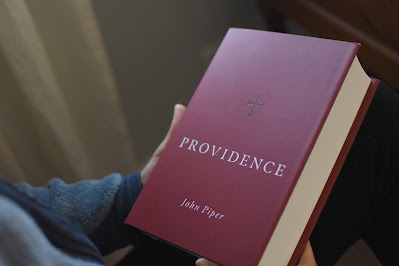
This passage on pages 229 and 230 of John Piper's Providence

Our Joy in Creation Is Finally Joy in the Lord
Return with me now to Psalm 104, where I said we could see clearly the purpose of God to make the world a theater for his glory for the enjoyment of his people:
O Lord, how manifold are your works! In wisdom have you made them all. (Ps. 104:24)
May the glory of the Lord endure forever. . . . I will sing to the Lord as long as I live; I will sing praise to my God while I have being. May my meditation be pleasing to him, for I rejoice in the Lord. (Ps. 104:31, 33–34) 
The psalmist calls his psalm a “meditation” (or meditative praise: “May my meditation be pleasing to him”). He has been meditating on the world God creates and sustains and governs. The world of providence. What he has seen moved him to exult in God’s unparalleled wisdom in the countless natural wonders God creates and controls. “In wisdom have you made them all.” The glory of this wisdom, and its execution in power and goodness, causes the psalmist to sing and praise and rejoice in the Lord.
This is crucial to note: he rejoices “in the Lord” (104:34). Yes, he rejoices in the works of the Lord (as God himself does, 104:31). It would be an ungrateful sin not to. They are gifts and blessings. But when all is said and done and the psalmist hopes his meditation will be pleasing to God, the ground of his hope is this: “For I rejoice in the Lord” - not finally or fully in his works, but in himself. That is what creation is for. All of creation - in the skies above and on the earth beneath - is designed to reveal the glory of God. His glory, including his power, his divine nature, his understanding, his goodness - all these and more - is put on display in the theater of God’s glory called the natural world:
The heavens declare the glory of God, and the sky above proclaims his handiwork. (Ps. 19:1)
[God’s] invisible attributes, namely, his eternal power and divine nature, have been clearly perceived, ever since the creation of the world, in the things that have been made. (Rom. 1:20)
The Lord is the everlasting God, the Creator of the ends of the earth. He does not faint or grow weary; his understanding is unsearchable. (Isa. 40:28)
The Lord is good to all, and his mercy is over all that he has made. (Ps. 145:9)

20211108

Sermon The Works of God (9)


At the moment we are in a series looking at things to meditate on. We've been saying that if we profess to be Christians that implies certain obligations on our part.
  • Christians pray. Devote yourselves to prayer, Paul says (Colossians 4:2).
  • Christians read their Bibles. Psalm 1 says the blessed person delights in the law of the Lord
  • Christians also meditate on God and his Word, as Psalm 1 says, day and night.
To help us in this we are suggesting subjects that you can usefully meditate on. So far we've looked at four subjects - God's nature and attributes, the states of Christ (his humiliation and exaltation), human nature ion its fourfold state and the four last things (death, judgement, heaven and hell).
In the list I am working from the Puritan George Swinnock also mentions the offices of Christ (His being prophet, priest and king) the vanity of the creature, the sinfulness of sin, the love and fullness of the Saviour. Then at the end of his list he has the divine Word and the divine works.
A great deal of our time meditating will be spent simply meditating on a verse or several verses of Scripture. You take a verse, say John 3:16 For God so loved the world that he gave his one and only Son, that whoever believes in him shall not perish but have eternal life. You think of the fact the sentence begins with God - where we must always begin. It speaks of God's love (God so loved). It is always good to meditate on God's love. When it comes to world you'll have to decide what it means in that context - obviously not the planet, probably not all the people in it, either. Probably the world in the sense of its wickedness and lostness. God so loved the world that he gave - he did something about it. He gave his one and only Son ... and so on.
Besides meditating on God's Word, we should meditate on his works. This can be a little more difficult to get to but there are lots of resources for us. So for example, have you ever sat and thought about water? Perhaps not but it is worth doing.
Let me quote from part of an article I found on water.
... Water might not immediately come to mind when we think of God's good gifts to us. But it is so well designed for our use that a simple glass of water should make us aware of the fingerprint of the Creator and give him glory.
Water is not only essential to life on earth, but also incredibly useful. We drink it, cook with it, bathe in it, clean with it, play in it (or on it in colder times) ... Water regulates earth’s temperature, provides a habitat for the seafood we eat and is essential for growing all of our food. And those are only a few of water’s uses!
Water is colourless and tasteless, making it perfect for cooking. If it had a flavour or even a colour, certain foods would be made much less appetising. Research has even shown our bodies may be able to taste tasteless water, alerting us if we are drinking something that looks like water but is not actually water. Water in its pure state has a neutral pH (not an acid or alkali), again making it perfect for cooking and drinking.
Water is ideal for transporting dissolved substances, such as minerals, nutrients and waste, throughout (or out of) our bodies.
Water is one of few liquids that expand when frozen, allowing it to float on liquid water. If water sank when it froze, aquatic life in colder climates would be impossible.
Water molecules stick to each other, creating surface tension. Surface tension allows insects to walk on water, makes rain fall in droplets, allows particles to float in water and keeps water from immediately evaporating.
... Water was one of God’s first creations. Genesis 1:1, 2 says God created the heavens and earth and initially the earth was covered in water. As 2 Peter emphasises, the earth was formed out of water and through water (2 Pet 3:5). On day two, this water was separated so some remains on earth and some is spread throughout the heavens ....
I'm sure you could do that with other subjects such as air and fire and so on. What I thought we could usefully do this morning is to consider some of the animals God has created. Probably the best way to do that is to go to Scripture and some of the passages that mention animals and direct our meditation in that way. I want us to look at four places

1. Learn from the various animals mentioned in the closing chapters of Job
So first let's go to the closing chapters of Job, chapters 38-40, where a number of creatures are mentioned. The reason they are mentioned, along with things like snow and ice, rain and hail, the stars and the sea, is to underline the simple truth that God is in control and that if we wish to challenge the way he runs this world then we need to get some education first. There is a whole lot going on in this world that we know very little about.
The references to animals begin at the end of Chapter 38 (39-41) where God asks the question
Do you hunt the prey for the lioness and satisfy the hunger of the lions when they crouch in their dens or lie in wait in a thicket? Who provides food for the raven when its young cry out to God and wander about for lack of food? Now we have a tremendous advantage over Job I guess in that we know what is being spoken about here. We have seen documentaries that show lions hunting or ravens feeding their young. When we see such footage we ought to remember that it is God who created all these creatures and who cares for them all in the wild. He is in absolute control.
The passage goes on to speak about mountain goats, wild donkeys, the wild oxen, ostriches, horses and birds of prey like hawks and eagles. Job has to put his hand over his mouth and humble himself. What does he know?
And then it starts up again. God speaks this time about the Behemoth, a land creature, and at length, the Leviathan, a sea creature. The writer has a lot of fun. He says of the Leviathan (41:4) Can you make a pet of it like a bird or put it on a leash for the young women in your house? We are not sure what these creatures are. Are they creatures still around today like a hippo and a whale or are they extinct creatures like dragons and dinosaurs? Whatever they are, the point still stands - God has made these magnificent creatures and he sustains them and every time we see or think about such creatures we ought to acknowledge the greatness and power of God.

2. Learn from some lions and a great fish in the Books of Daniel and Jonah
Understandably, the stories of Daniel in the lions den and Jonah in the belly of the great fish are among the most famous in the Old Testament. In Daniel 6 Daniel as an old man becomes the third highest in the Persian kingdom under Darius. Due to the envy of his enemies he ends up, despite all Darius can do, as you know, being thrown into a den of lions, which were kept for amusement and as an occasional means of punishing offenders.
You are well aware that lions are dangerous creatures. Every few weeks or so you can read about people being attacked and often killed by lions. $ For example the other day 22 year old Alexandra Black was killed by a lion in a Conservation Centre in Indiana when an enclosure was being cleaned. She had a degree in animal behaviour and had started working as an intern at the centre two weeks before. Attempts to tranquilise the animal failed so it was shot dead. It's unclear how it escaped the area that was supposed to be locked.
Now what happens in Daniel's case is that though he is lowered into the very den where these lions are kept he spends a whole night there unharmed. It is wonderful to read what happened the next morning (Daniel 6:19-23) At the first light of dawn, the king got up and hurried to the lions' den. When he came near the den, he called to Daniel in an anguished voice, Daniel, servant of the living God, has your God, whom you serve continually, been able to rescue you from the lions? Daniel answered, May the king live forever! My God sent his angel, and he shut the mouths of the lions. They have not hurt me, because I was found innocent in his sight. Nor have I ever done any wrong before you, Your Majesty. The king was overjoyed and gave orders to lift Daniel out of the den. And when Daniel was lifted from the den, no wound was found on him, and don't miss this because he had trusted in his God. This is a dangerous fallen world but we will be safe if we trust in the Lord. When Daniel's false accusers and their families are thrown into the same den (24), strikingly before they reached the floor of the den, the lions overpowered them and crushed all their bones.
The story of Jonah is similar in some ways, except in this story Jonah is actually swallowed by a great sea creature but he prays from the very belly of the fish and is miraculously vomited out alive.
Plenty of people say it didn't happen, of course, and it is not something we can be sure has happened since. There are lots of stories but none seem to be authentic. There are sea creatures that could swallow a man whole - a sperm whale or white shark for example - the problem is surviving once in there. It is likely that Jonah was bleached by the stomach juices. If we believe this is God's Word there is no need to doubt the truth of the story. Like the story of Daniel it is a story of the power of faith, the goodness of God and the fact that he is a God who can raise us from the dead.

3. Learn from the various animals mentioned in Proverbs 30
Proverbs 30 is by a man called Agur son of Jakeh. Chapter 30 refers to some 12 different creatures as Agur endeavours to drive home various points. Let's think about these different animals then.
1. Learn from the leech about insatiable things. 15, 16 The leech has two daughters. 'Give! Give!' they cry. There are three things that are never satisfied, four that never say, 'Enough!': the grave, the barren womb, land, which is never satisfied with water, and fire, which never says, 'Enough!'
So we begin with the humble leech. As you know, the outstanding feature of leeches is that they are bloodsuckers. It sounds horrible but we should be thankful for them. The medical profession still use them - for example to improve blood circulation. The leech's insatiable desire for blood is a pointer to four other things - the grave, the barren womb, land in time of drought and fire.
There never comes a point where the grave says ‘Okay, enough people have died’. Death goes on and on and will until Christ returns.
It is a terrible thing for woman to want children and yet not be able to. It is not good saying to such a woman ‘Well you’ve been trying for a few years now. Best give up on it.’ No, while there is a possibility of bearing children she will long for it. Pray for such people.
Think also of how drought, on one hand, can devastate a country and of how fires can do such damage. Again it stirs us to pray.
The leech gives us insights then. Beware of your passions and ambitions. They can be powerful things. Look to Lord and his will, rather.
2. Learn from the vultures and ravens about obeying your parents. Verse 17 seems a strange proverb The eye that mocks a father, that scorns an aged mother, will be pecked out by the ravens of the valley, will be eaten by the vultures.
It is from a desert culture where a child is warned by its parents not to wander off. Once or twice the child disobediently wanders, however, but thankfully is found again unharmed. Again it is reminded to obey its parents. But then it strays again. This time there is no happy ending. It is only some time later that the child is found its eyes pecked out by ravens, its little body eaten by vultures.
3. Learn from eagles and snakes about what happens when difficult things become easy. 18-20 There are three things that are too amazing for me, four that I do not understand: the way of an eagle in the sky, the way of a snake on a rock, the way of a ship on the high seas, and the way of a man with a young woman. This is the way of an adulterous woman: She eats and wipes her mouth and says, 'I've done nothing wrong.'
First we are reminded of some amazing, incomprehensible things. The first two concern animals
The way an eagle flies through the sky. They do it with amazing ease. Not like us at all.
The way a snake moves across rough rock. Snakes have no legs but can quickly move along even on rough ground. How different we are - barefoot on a pebble beach for example.
He also mentions a ship far from port - out on the high seas. What a majestic sight - a ship sailing on the sea. The last reference is either the act of wooing or the actual mysterious act of love.
Some see the point of comparison in the fact no trace is left in each case. Rather the point is that these mysterious things seem hard, almost impossible - flying, moving smoothly over rock, riding the waves, a man seducing a maiden - but happen. In verse 5 we see the adulteress who sees the act of adultery as like having a meal. You think that a terrible thing, I trust. How can she live with herself? For her sex is no big deal. Yes, the first time perhaps it was something (like the first time you see an eagle fly, a snake on a rock) but no longer. Her conscience is seared. What about you? Are you so used to certain sins, you think nothing of them? What a danger! Recognise it. Repent!
4. Learn from from four small creatures about using resources wisely. (Skipping over verses 21-23) 24-28 Four things on earth are small, yet they are extremely wise: Ants are creatures of little strength, yet they store up their food in the summer; hyraxes are creatures of little power, yet they make their home in the crags; locusts have no king, yet they advance together in ranks; a lizard can be caught with the hand, yet it is found in kings' palaces.
Four small creatures that are wise in certain respects
Ants - small insects that work hard all summer building up stores of food for winter. (There is a longer section on the ant as an example in Chapter 6)
Hyraxes (or some other small creature like a rabbit). For protection these creatures wisely hide in holes in the rocks, safe from predators.
Locusts - Larger than most ants but still small. Together they cause large scale devastation.
Lizards - If you've lived in hot climates you know how you see them in people's houses.
In each case the stress is on the animal's limited size then on the wise way they overcome that disadvantage. Creatures with little strength or power, with no king and that are easily caught make preparations for winter, hide in the crags, advance in ranks and are found in palaces.
We should praise God for these different creatures he has made and learn not to despise the weak. We too are weak and must learn to make the most of our circumstances. Out limitations must not be an excuse for doing nothing. Rather, prepare for judgement day; hide in the Rock who is Christ; unite with other believers and despite your weakness be bold to believe you may enter the palace of the Great King by grace.
5. Learn from four other creatures about true dignity. 29-31 There are three things that are stately in their stride, four that move with stately bearing: a lion, mighty among beasts, who retreats before nothing; a strutting cockerel, a he-goat, and a king secure against revolt.
Here we have three stately animals - a fearless lion, a strutting cockerel, a he-goat - and a king with his army. Nothing is spelled out but it is likely that Agur is getting us to think about the nature and variety of dignity. We need to recognise where true dignity lies - not in our own bravery, our clothing, our uniqueness or our strength. Rather true human dignity is in being made in the image of God. That image is recreated when we trust in Christ.

4. Learn from the four animals mentioned by Jesus in Matthew 10:16
To finish, let's meditate a short while on Matthew 10:16. There Jesus is about to send out his disciples on mission and he says I am sending you out like sheep among wolves. Therefore be as shrewd as snakes and as innocent as doves.
So in one short sentence Jesus mentions four animals for us to think about, when it comes to evangelism. In each case it is only one characteristic of the animal that is in mind and if you want to understand what Jesus is saying you need to get that right. If you decided that the thing about sheep was that they produce wool, about wolves that they are nocturnal, snakes that they are found on the ground and doves that they are white, you would not learn much. In fact with the latter two Jesus spells out that is the shrewdness of snakes he has in mind and the innocence of doves. As for sheep and wolves, in that context they are marked by ferociousness and vulnerability.
And so we say we must go out and tell people about Jesus but we are vulnerable people going out among wolves who can easily undermine what we say and do us spiritual or even physical harm if we do not take care. I remember talking to a fellow student when I was in college who had come full of enthusiasm to tell people about Jesus. For him that meant getting involved in student life - drinking and dancing and so on. What he was finding, however, was that not only was it not going very well in that he wasn't winning others over but he was getting more and more worldly. He was forgetting that he was a sheep among wolves, who were baying for his blood.
With that is the call to be as shrewd as a snake and as innocent as a dove. We need to carefully think through how we can best win people. When a fisherman goes fishing, he will make sure that he has the right bait for catching the sort of fish he is after. We too have to do similar thinking. At the same time we need to be innocent, not trying to take advantage of people or trick them.
A few years ago I was in a research centre in South Wales. I thought I recognised the man in charge there. He was a friend of a good Christian friend of mine. We got chatting and he remembered coming to our church one Friday night to see a film. The film was called To Russia with love and he had been led to believe it was some sort of spy film. In fact it was a Christian film about the gospel in Russia. Misleading this man, boy as he was then, was certainly shrewd but it lacked innocency and so it utterly failed. It simply left a bitter taste and so the man was no nearer to becoming a Christian by it.